Blog

Inside Pavlok – The History of the Pavlok Hardware by Steve Trambert, Mechanical Engineer

This is part of our Inside Pavlok series—a series of blog posts by the Pavlok team talking about the story of how we work. I’m excited to introduce the story of the Pavlok hardware by our Mechanical Engineer, Steve Trambert. This post is dear to me, as it tells the history of Pavlok from inception (ahem — slap in the face) to our current stage. Hardware is one of the most difficult projects a person or company can take on, so I feel strongly while reading the words below.

I hope you enjoy Steve’s story as much as I do.

Hello!  I’m Steve Trambert.  I’m the mechanical engineer on the Pavlok team.  I design the mechanical enclosures, packaging and accessories for Pavlok.  I also manage our supply chain, maintain our relationships with vendors, and act as an informal Director of Hardware.  That might sound like a lot, but – as I’m sure you’ll learn from these introductory team blog posts – we all wear quite a number of hats here at Pavlok.  Often 4 or 5 stacked awkwardly atop one another.  Welcome to the exciting life of the entrepreneur!
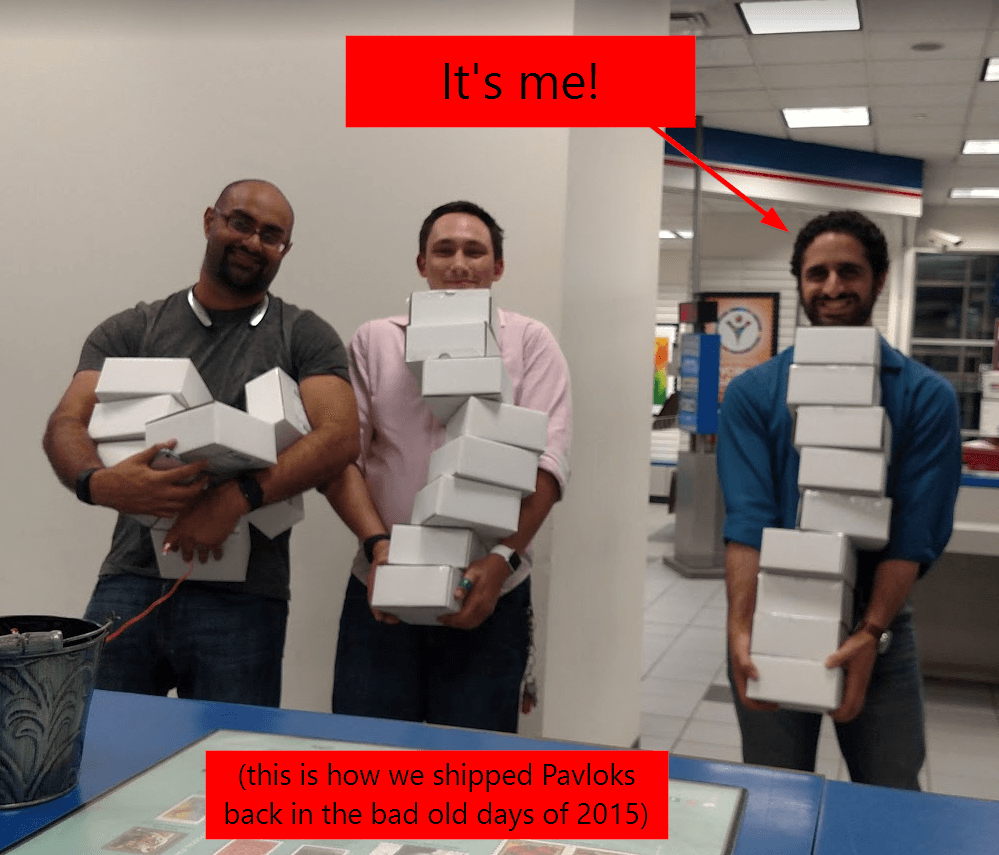
Me with Maneesh and Daniel
The First 25 Final Pavloks We Shipped — 8/7/2015

In my free time I like to kayak, ski, tinker with 3D printers, and nerd out over foreign policy.  I’ve actually got a second bachelor’s degree in International Relations.  That’s the amount of nerd I am.

I’ve been on the team here for almost 2 years now.  In March, 2015, I watched Maneesh speak on a panel of experts at a wearable tech event, got a beer with him afterwards, made him a 3D-printed prototype necklace two weeks later, and was then immediately invited to join the team.  The key to getting a job at Pavlok is a demonstrated ability to inflict pain on Maneesh.
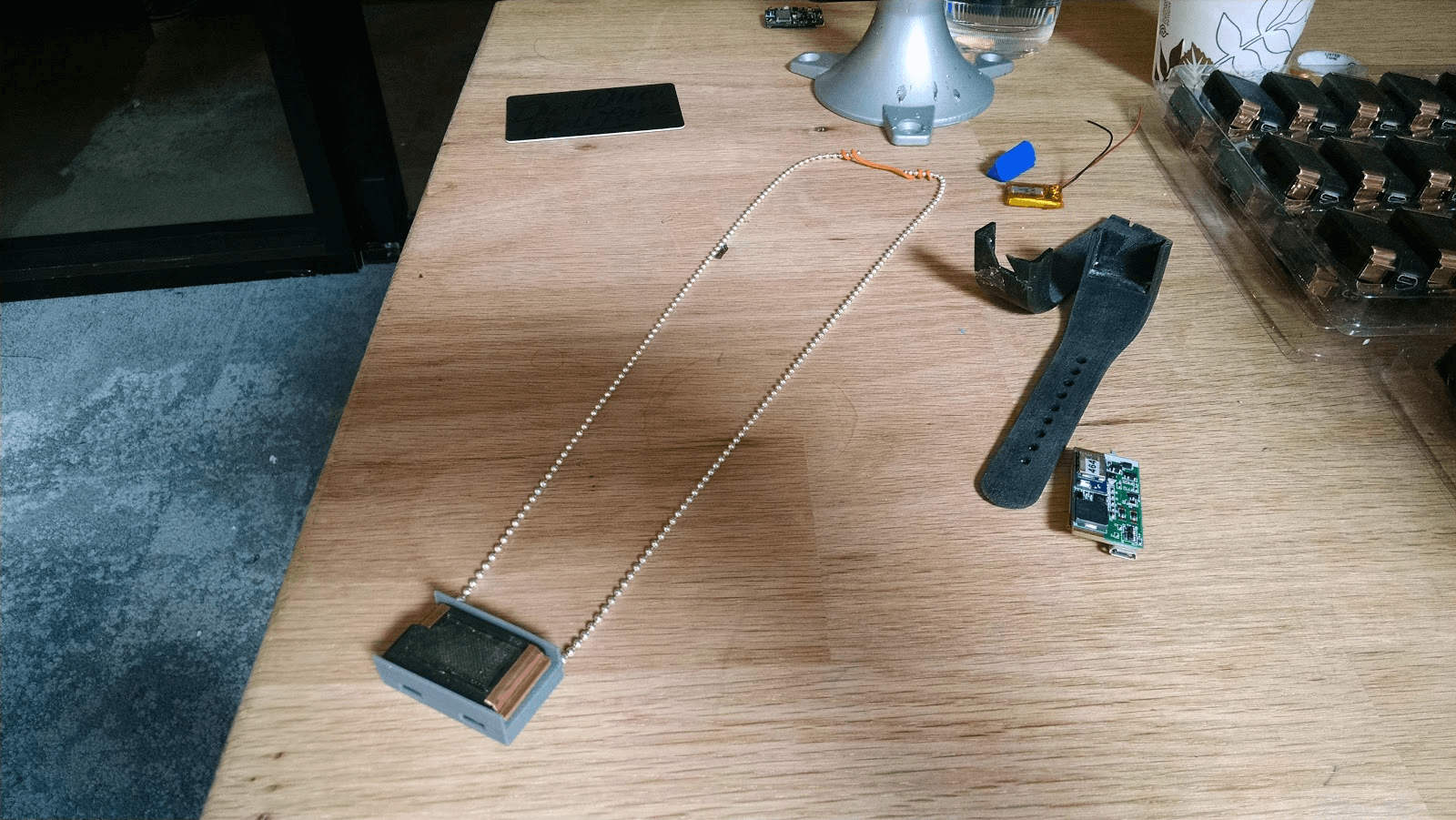
pasted image 0 3The original necklace prototype that got me my job


An Interview I did in 2016 about my time at Pavlok.

Enough about me though, let’s talk about something way more interesting… Pavlok history!  Specifically my area of expertise – Pavlok Hardware History!

As a young company, the saga of Pavlok thus far has been passed down largely through oral tradition.  Think of this as my humble attempt to start preserving that history, because some of this stuff is quite cool!

It seems fitting that Pavlok’s history be first committed to writing in the form of a blog post, because the history of Pavlok really began with a blog post:

First Stop on the Pavlok Hardware History Tour: Kara
pasted image 0 13

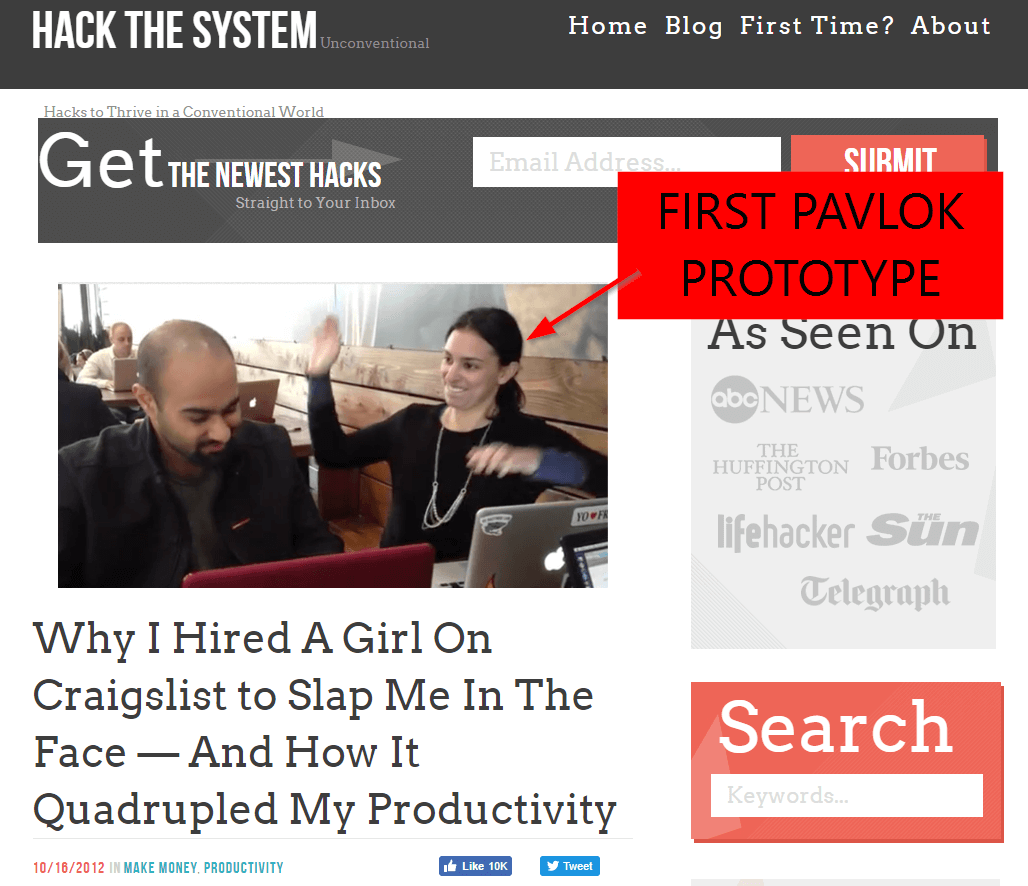
Meet the Pavlok hardware in its very first iteration.  Her name is Kara, and Maneesh hired her on Craigslist to slap him.

You should absolutely feel free to read The Blog Post yourself, you can find it here under Maneesh’s old Hack the System masthead.  Suffice it to say, Maneesh discovered – and demonstrated with cold data – that his productivity increased significantly when he had someone with him whose job was to keep him on-task and accountable to his goals.

We’ve always been an odd company, it seems fitting that we have a suitably odd origin story.
pasted image 0 4

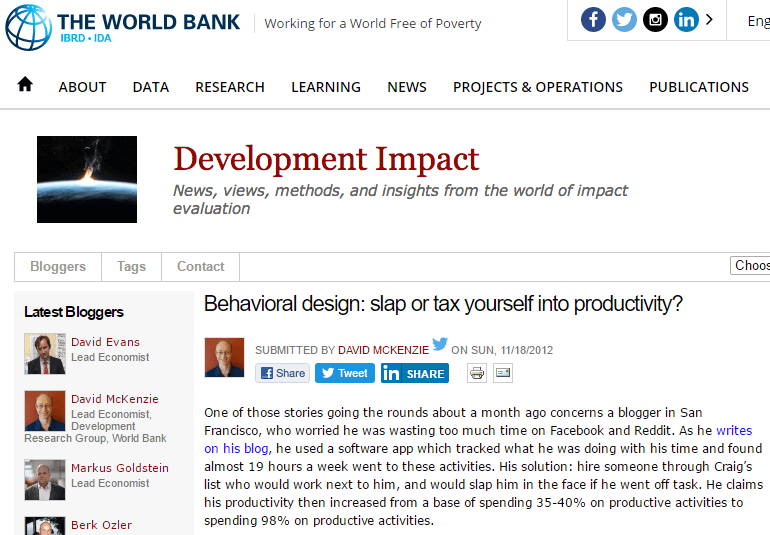
Even the World Bank got in on this story!

The response was tremendous.  The article was featured in the Daily Mail, Telegraph, Huffington Post, Buzz 60, Digg, NPR, Mix 106.5, The Daily Dot, Business Insider, Venturebeat, Yahoo! Finance and many more.  This article was intended to pose an interesting idea wrapped inside of a joke, but a sizeable contingent of readers began asking if there was something they could do to realize similar results without resorting to something as drastic as a professional slapper.

So, Maneesh had his lightbulb moment — what if he everyone could get slapped in the face? Unfortunately, slapping doesn’t scale, so he hit the lab with the next best thing: a dog shock collar. The idea: hack it to zap him whenever he went on Facebook.  He called up a friend — Dan Kaminsky — to rig it up with an Arduino and some code.

The only thing that might make this origin story better is some footage – and we’ve got some!  Take a look the very first night of Pavlok’s existence: https://youtu.be/SQW9bqw5O1E?t=16s

Thus Pavlok – or, more accurately, Behavioral Technology Group – was born.  Maneesh began pulling a team together with the goal of inventing a tool to help people backstop their willpower.

Second Stop: Early Days

Here there be monsters; the earliest days of Pavlok are shrouded in a degree of haze and mystery.  The folks who were on board at this point experimented with all sorts of ideas that you’ve probably never heard of.  For example, one of Pavlok’s early patent applications was for electronic shoelaces that wouldn’t unlace until the wearer met their step goal.  Another was for a wristband that would literally lock to your wrist – this is where the “lock” in “Pavlok” comes from.

Ultimately, however, the team settled on the Pavlok concept that we know and love today.  Much of this growing-up was facilitated by our entry into Bolt.  Bolt is a startup accelerator that invests specifically in promising young hardware startups.  They lent us space to work in their Boston office, access to engineers and experts, and an excellent community of fellow hardware entrepreneurs.


Bolt Office Intro Video 

Third Stop: Prototypes

Do you like baby photos?  There’s something magical about seeing what your full-grown friends looked like when they were awkward toddlers with a lot of learning to do.  That’s what the first Pavlok prototypes were like.  Here are a couple baby photos of Pavlok:
pasted image 0 6

pasted image 0

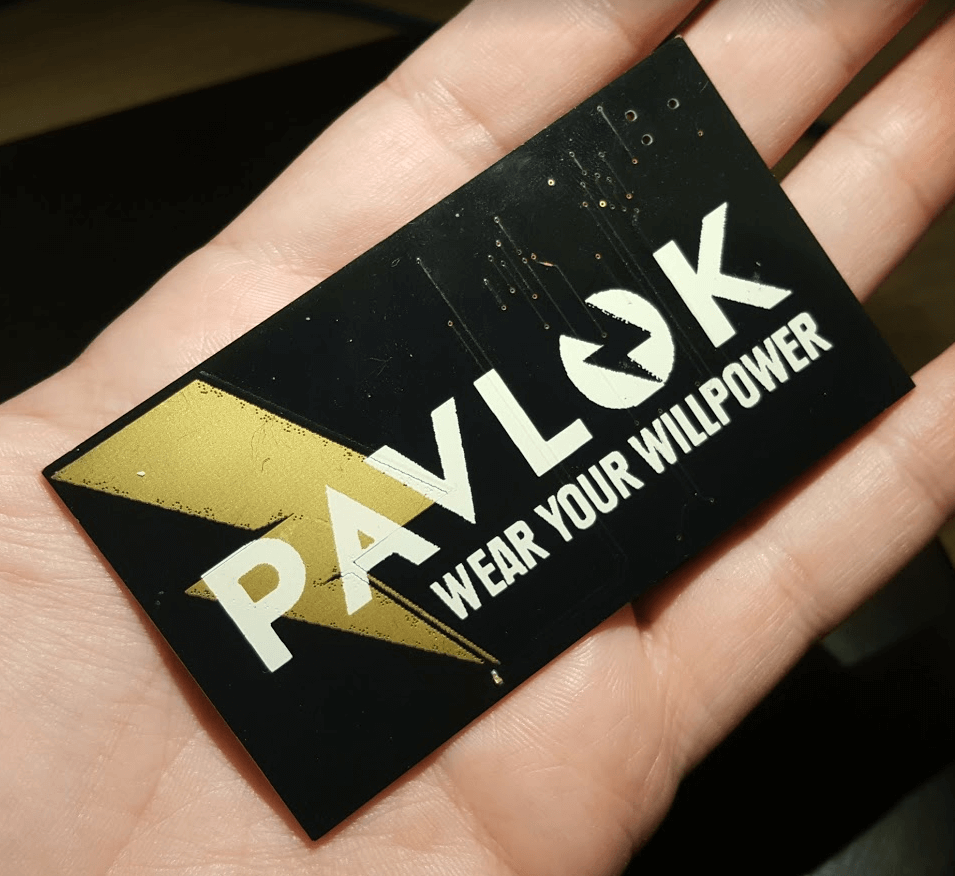
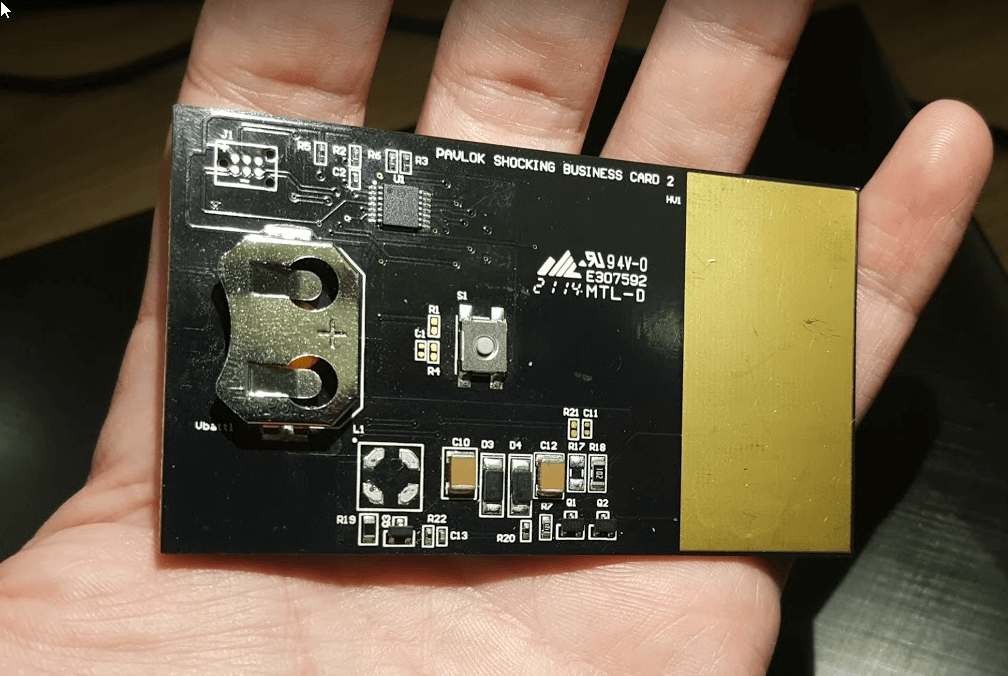
What you’re looking at is the very first prototype of our shock circuit.  If you’ve got eagle eyes, you might notice something a little curious about the top photo – the tiny silkscreen text on the back of the circuit board says “Pavlok Shocking Business Card.”  We figured that as long as we were making a prototype shock circuit, why not design it in the form of a shocking business card?  The lightning bolt on the front and the big pad on the back serve as the electrodes.  If you really want to make an impression at a networking event, you can hit the “shock” button on the card just as you’re handing it over to your latest contact.

We’re very mature.

The shocking business card was essentially “one half” of our original prototype.  The other half was a second board, intended to test the rest of our rough electronics design – processing and bluetooth connectivity.  You can see it in the “family portrait” photo later in this post.

Building on the lessons learned from those first prototypes, we built… *drumroll* the Alpha Unit.
pasted image 0 5

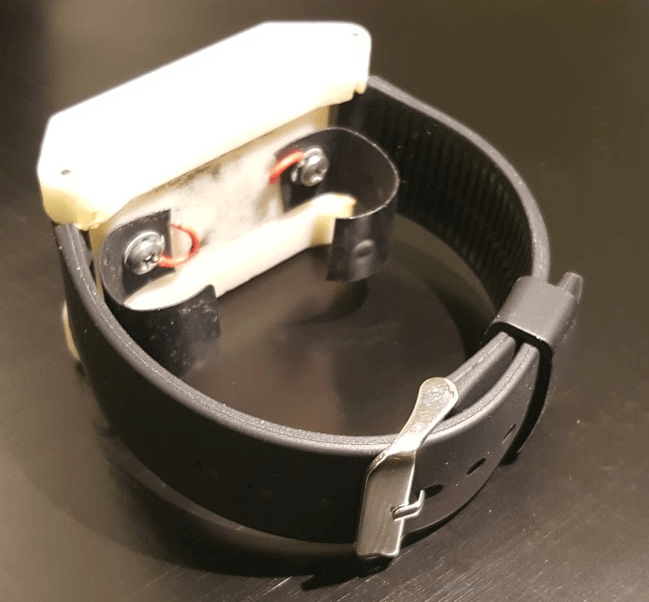
The Alpha was the first iteration of Pavlok that was truly wearable.  These were big, clunky devices.  They had some serious character though – each Alpha was individually laser-engraved with its own short-run serial number.  Conductivity came through two strips of conductive rubber at the back of the device, which were fastened to it with wire and some scary looking screws:
pasted image 0 7

My, what big teeth you have.

pasted image 0 1

Want to watch some neat ancient history?  Check out one of our first hands-on video reviews, produced by Yahoo Tech after spending some quality time with an Alpha protoype: https://www.yahoo.com/tech/i-strap-the-gadget-to-my-wrist-and-double-click-101397371719.html

There’s another interesting thing about the Alpha unit – it saved the company.  Hardware R&D is an expensive proposition, and as a startup it can be difficult to cover your costs while you make your way from concept to mass production.  In Pavlok’s case, we came to May 2014 with just 3 weeks of capital left in the bank.  At that point we were still months away from being ready to launch our Indiegogo campaign.  So Maneesh took a gamble.  He hosted a habit-breaking webinar for about 120 Pavlok fans, and made them an offer – they could become our earliest of early birds by buying one of our Pavlok Alpha units.  It came with coaching service from Maneesh personally, and a strong warning that the device was still very rough around the edges.

Maneesh earned us $30,000 in that webinar, and Pavlok stayed afloat.  Pavlok shipped it’s first 25 alpha prototypes on July 31.2014 — exactly 364 days after the company was founded on August 31, 2013.

If you’re one of the super-early adopters of Pavlok who purchased one of these Alpha units, I just want to take a moment to say thanks.  This was a case where your faith in the mission – and in us – literally kept us going.  In addition, the feedback you provided allowed us to make the final mass-production Pavlok eminently better.

Also, you should shoot me an email!  We don’t have many of these old dogs around, and we would love to buy your Alpha unit back from you to preserve as a piece of company history 😀

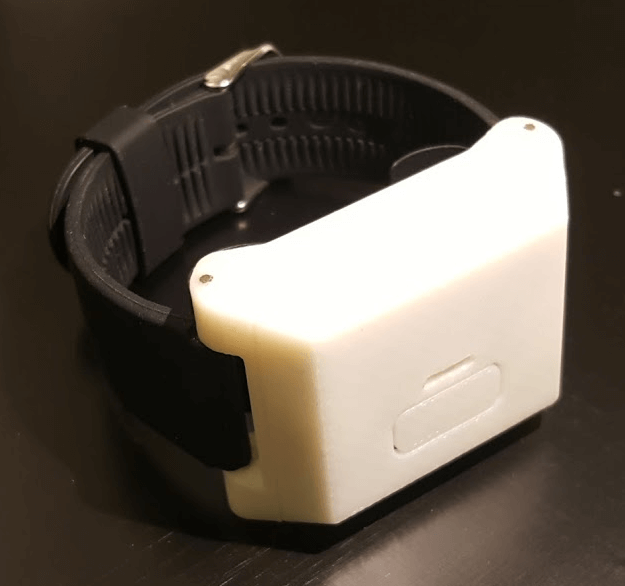
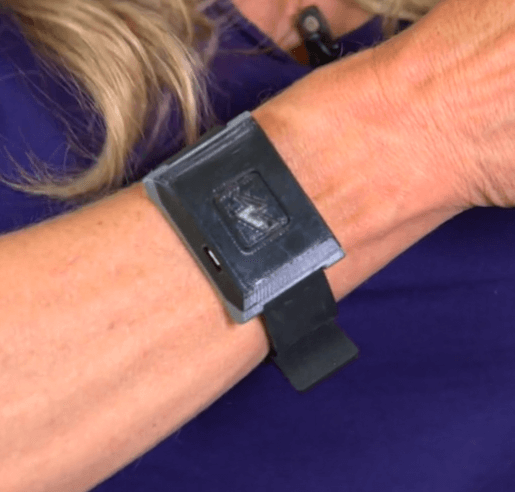
That last pre-production prototype that we built was the Pavlok Beta.  Some of you might recognize it, as the Beta was the first prototype to see wide sale with Pavlok.  We sold about 50 of them before our Indiegogo campaign, 300 more during the campaign, and a few more after the campaign.  The new wristband was produced from silicone in a light-duty aluminum mold, and the enclosure was 3D-printed in our office on a Flashforge.  The way it conducted was pretty interesting – it used copper tape, which we hand-soldered to two special pads on the board.  Each unit took over an hour to build by hand.  They were no fun to manufacture, but they do look pretty neat, don’t they?
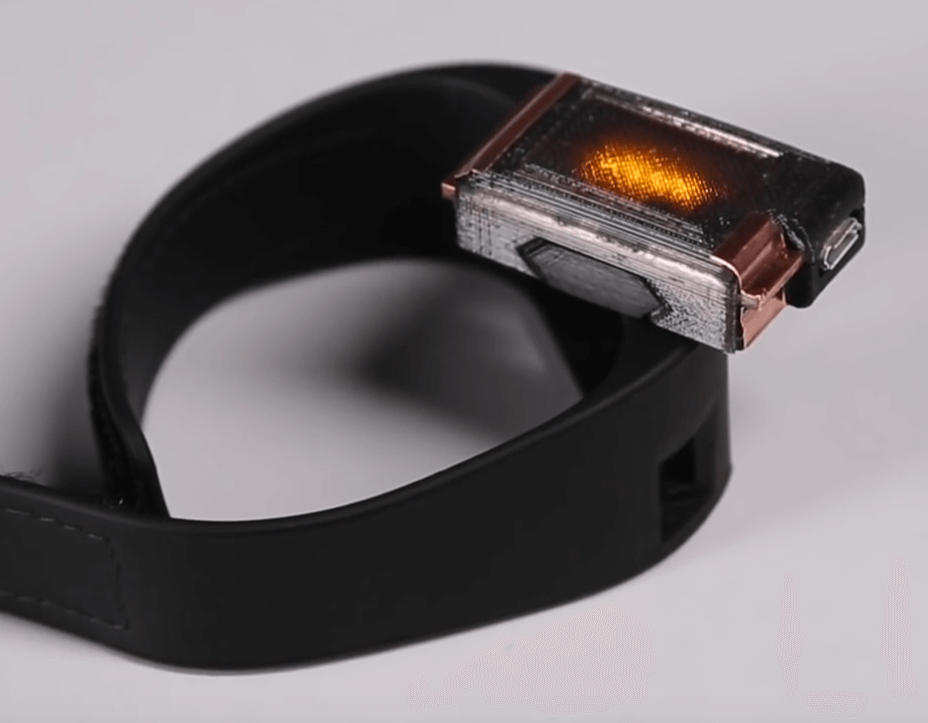
pasted image 0 8

Want to see more of the Pavlok Beta?  Here’s a neat video review out of Germany: https://www.youtube.com/watch?v=94z30z48MEs

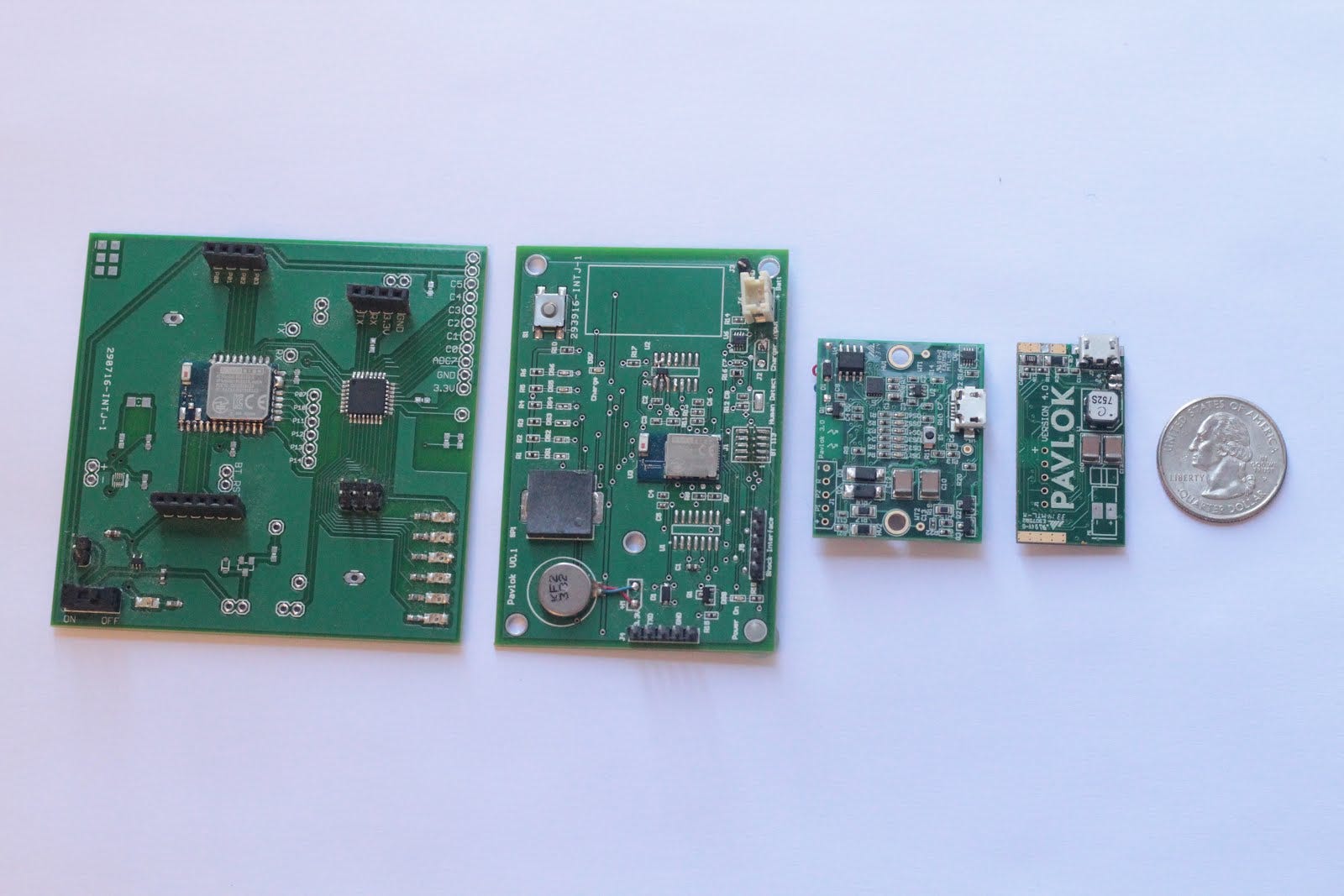
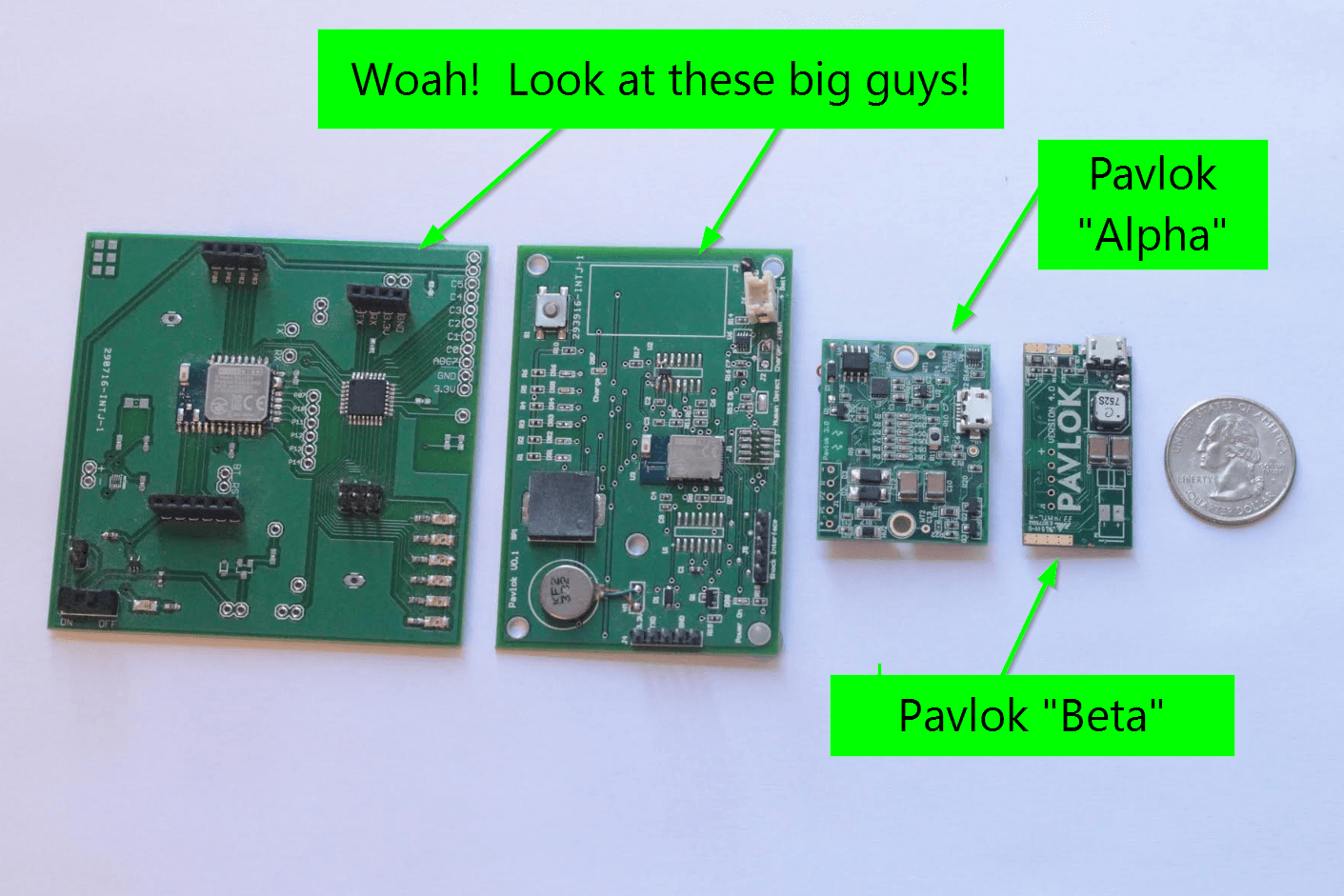
And if you’ve had trouble following along with the story of our prototypes, here’s a family portrait to help you wrap your head around the progression:
pavlok history

Here’s the Pavlok family portrait.  The guy on the far left is more like a cousin – he’s a dev board for BlueGiga.  Continuing to the right, you see a pre-alpha prototype, our Alpha board, and our Beta board.

Fourth Stop: Crowdfunding

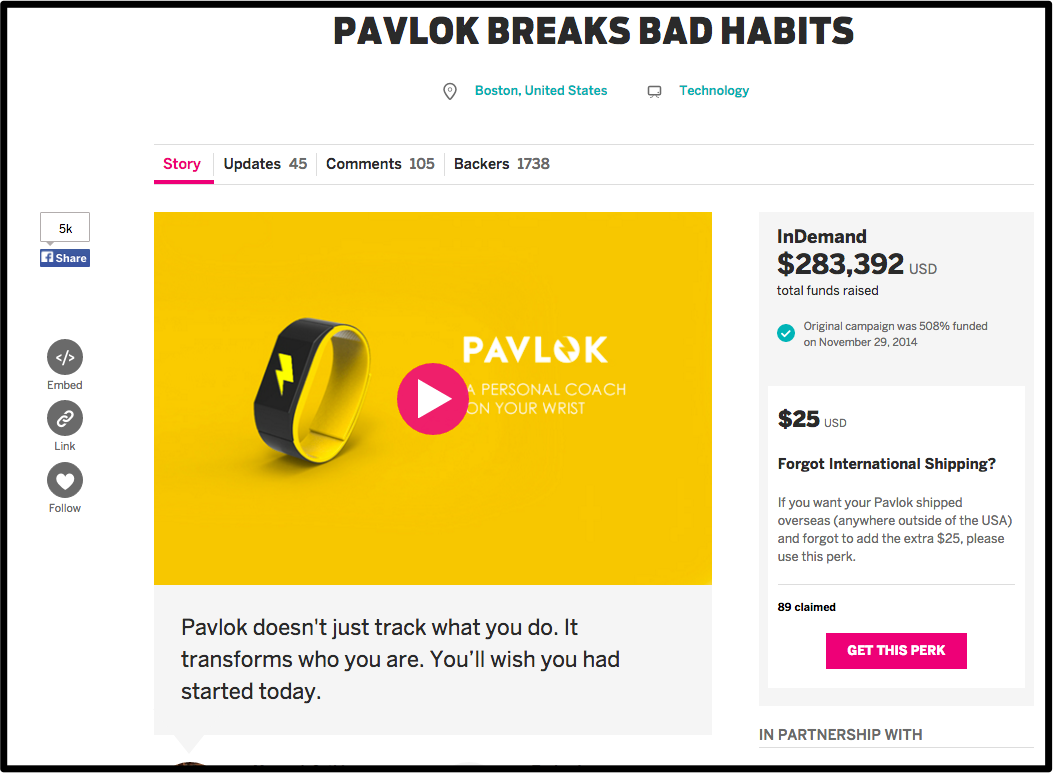
Woo!  We made it to the crowdfunding stage – and boy did we make it.  Pavlok’s Indiegogo campaign went live on September 30, 2014, and quickly met its $50,000 goal.  In fact, by the time the campaign ended on November 30, we were 508% funded, with more than a quarter of a million dollars in backer funding.  Feel free to check out the Indiegogo page for a small dose of primary-source history!
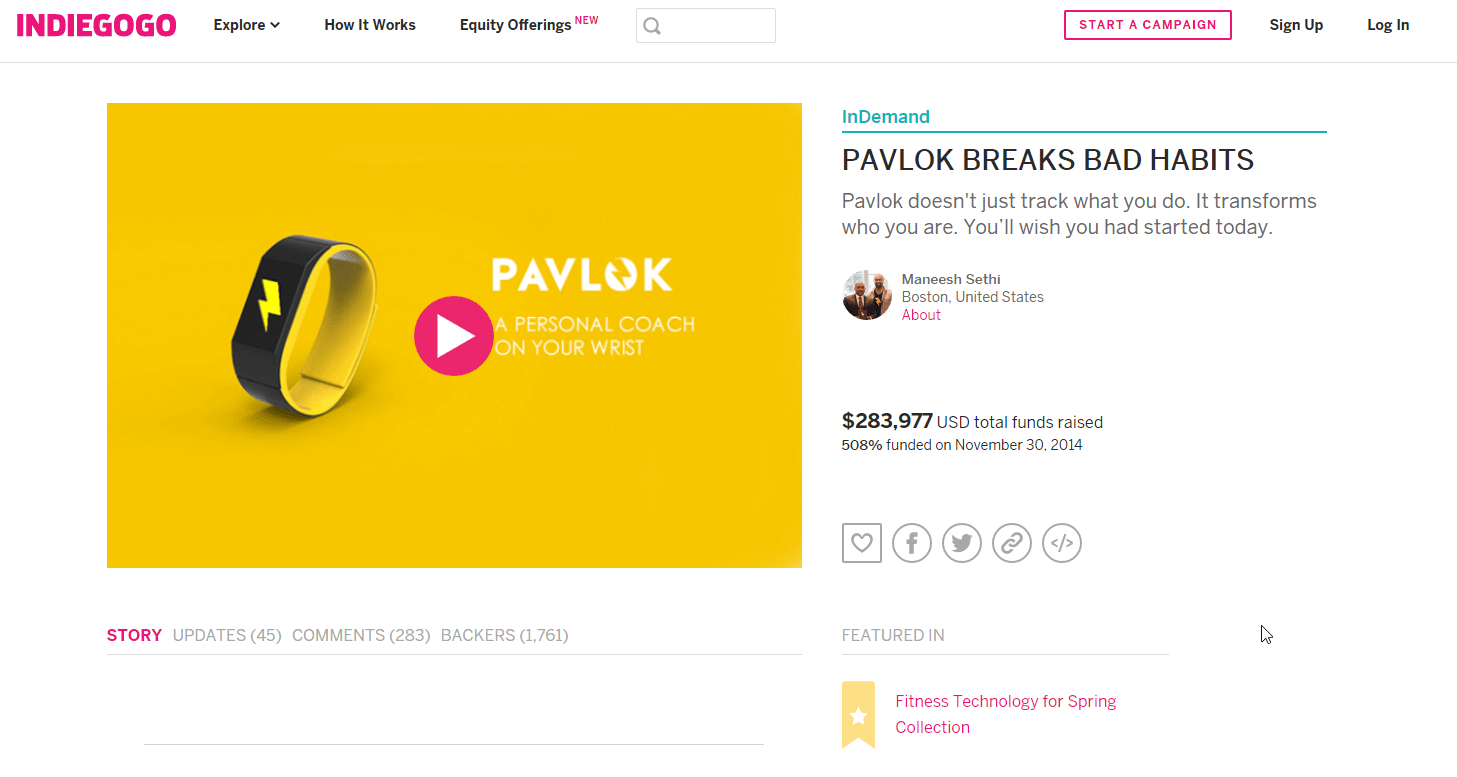
pasted image 0 10.

This is another moment where I’d like to pause to briefly thank our community.  If you’re reading this, and you’re an Indiegogo backer, we’re all grateful to you for helping us get off the ground.  We wouldn’t be here without your support.

We’re often asked for advice on how to go about launching a successful Kickstarter.  In the words of Maneesh, our secret sauce is pretty straightforward: “If you want good crowdfunding publicity, make a product that shocks people.”  We earned a ton of press simply by virtue of being odd.

We’re proud to be odd here at Pavlok.  There are a million wearable fitness trackers out there, and studies show that they have almost no actual impact on user fitness.  We make something truly different from anything else, and we’re happy to do it.

Last Stop: Production Pavlok

And now we’ve made it to the present… the Pavlok you’re undoubtedly familiar with, a device known to us as “The Production Unit.”  This is the point in the Pavlok timeline where I come in 😀  I joined the company in March 2015 to get this guy into mass production.
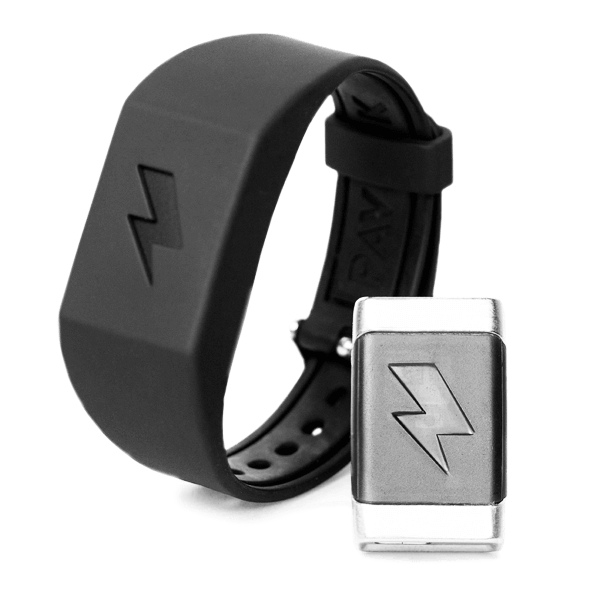
pasted image 0 12

There’s something interesting here; notice how I didn’t say that I joined the company to design the production unit, only to get it into manufacturing?  That’s because I played only a minimal role in designing the Pavlok module itself.  The true credit doesn’t lie with any mechanical engineer, in fact.  It actually lies with our illustrious electrical engineer, Sasha Iuelu!  He completed the design and ordered the first injection molding tool before I even joined the company.  How did he do it?  By buying a Mech E textbook and studying up.  It goes to show you that anyone can break into hardware these days if they have the will to learn and fast internet.

Rather than designing the module itself, I designed the Pavlok’s wristband and packaging, and oversaw the selection of our manufacturing partners here in the USA and overseas.  I also provided the team with a special sort of incentive to spur us on to ship our Indiegogo backer rewards:
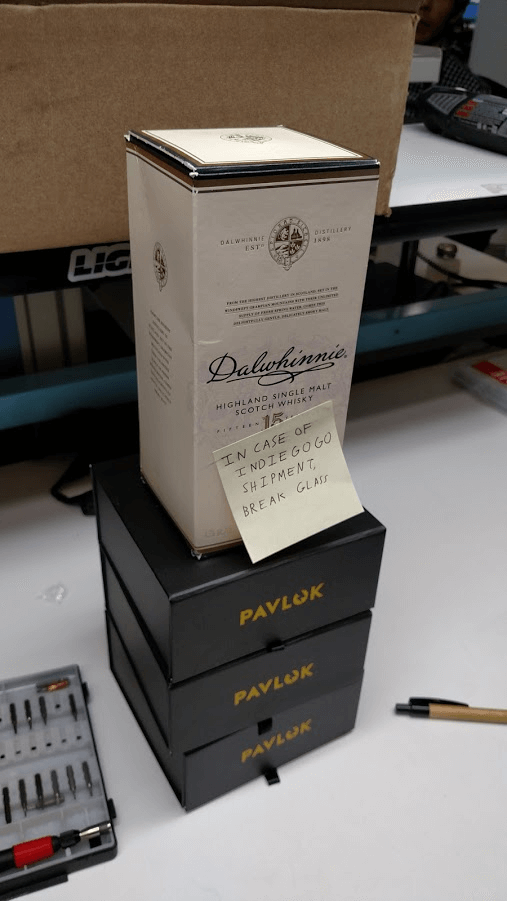
pasted image 0 9

Speaking of shipping, that was an awesome night!  The very first units went out on August 7, 2015.  Daniel, Maneesh and I personally carried them to Boston’s late night post office.  First, however, we took a detour to visit a backer who actually lived in Boston, to surprise him with a hand-delivered unit.  Here is the very first Pavlok backer to receive their production unit.
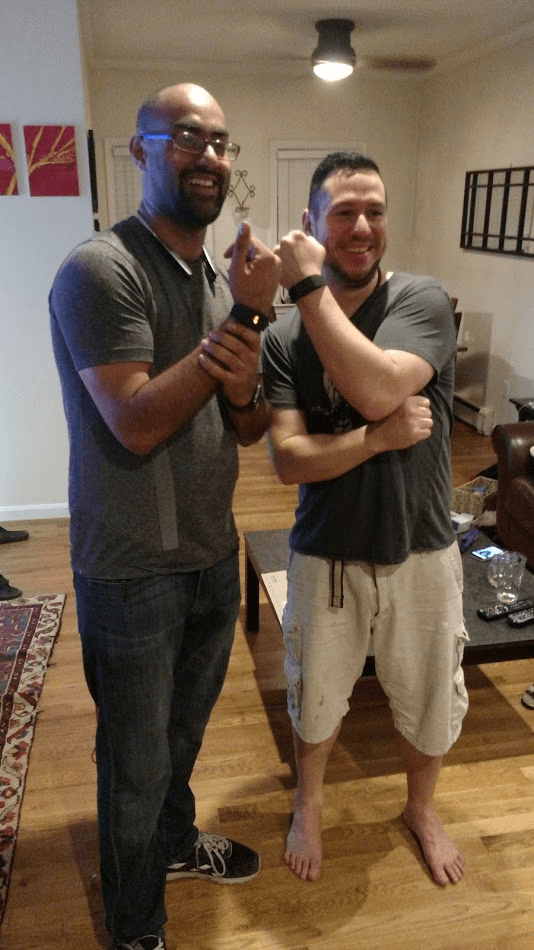
pasted image 0 11

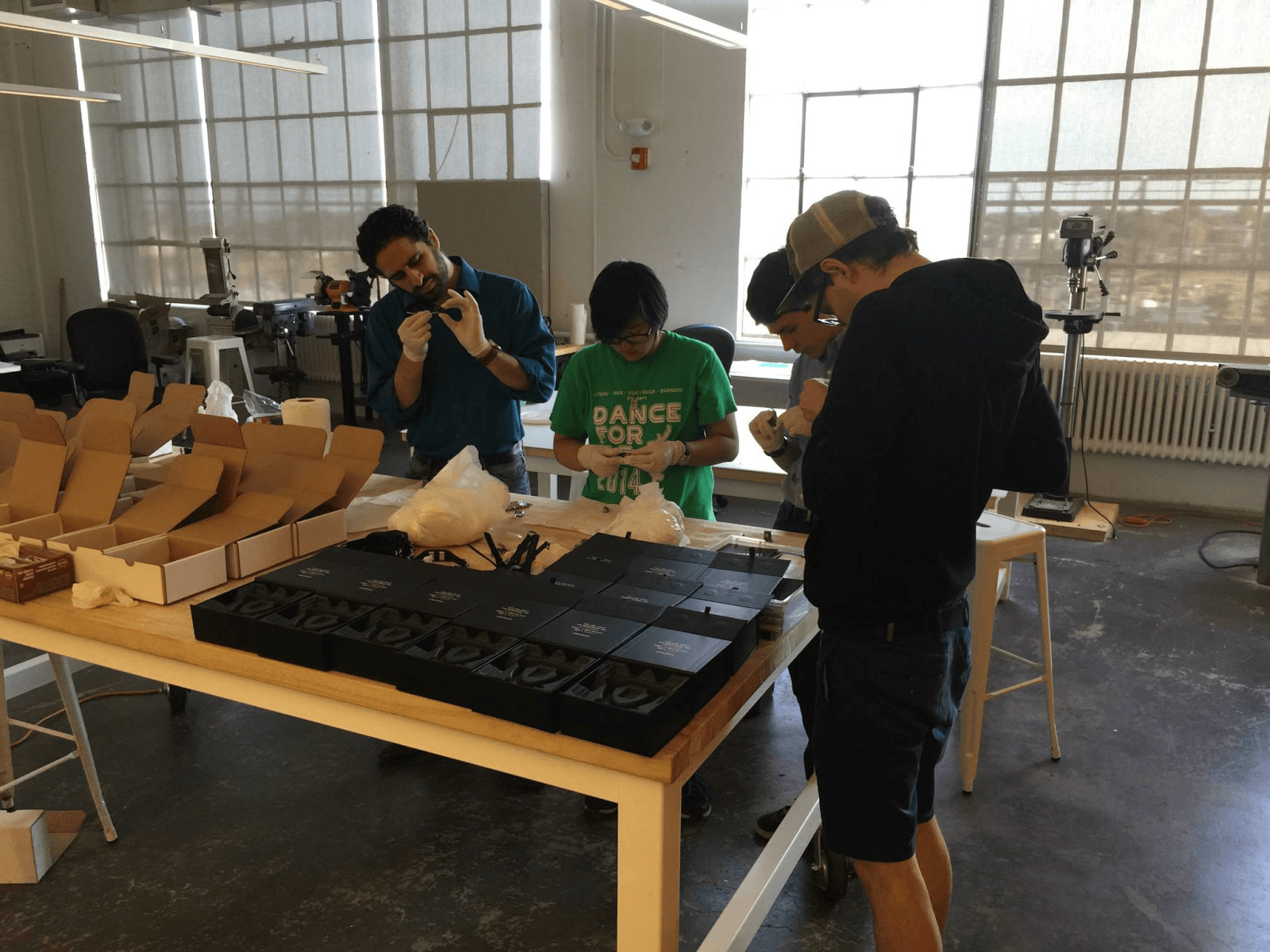
It felt great to fulfill our Indiegogo orders.  This was an exciting time, but it was also tough.   I had to put nearly $20k of company expenses on my personal credit card to buy all the parts we needed.  Everyone pulled double-duty on the assembly line (though that part was pretty fun).
pasted image 0 14

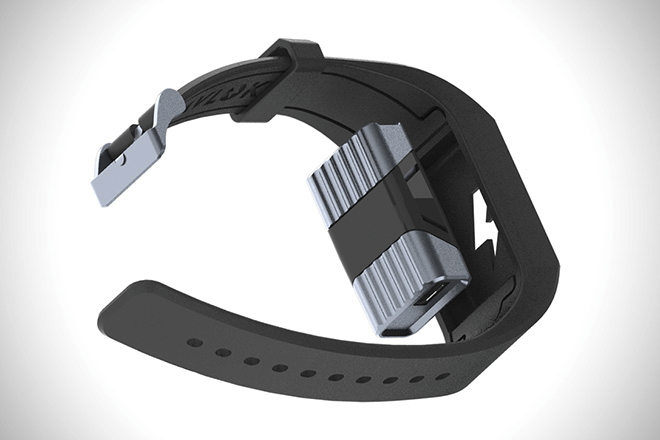
Let’s talk a bit about the production unit.  Our final device is surprisingly simple, which is of course by design.  The shorter the BOM (bill of materials), and the less labor time involved in assembling those components, the lower the manufacturing cost.  The production module is comprised of an internal circuit board which slips into an injection-molded ABS “body” component (this is the black plastic piece in the middle with the lightning bolt).  It’s secured inside by two die-cast zinc terminals, which attach to the body with snap-fit features.  The terminals are plated with white bronze to give them their nice finish.  White bronze allows us to achieve the attractive appearance of chrome plating, without having to forsake customers who have nickel allergies (the chrome plating process involves a layer of nickel).

We had trouble nailing that snap-fit in the early days, so – if you have a very old unit – it may well have been simply glued shut with E-6000 by one of us on the team.  The very early manufacturing process also involved putting Kapton tape on a ton of components to insulate and secure them, but we’ve managed to improve the manufacturability to the point where none is required anymore.

There’s something that you might notice about both the production unit and the Beta unit.  Unlike the Alpha’s, they’re separate devices that are removable from the central wristband.  This offered us a number of advantages.  For example, it allows users to pop the unit out of the wristband and pop it into a different color wristband or an alternate accessory like a necklace or belt clip.  You can expect the first of those alternate accessories to appear for sale in the next few months, but I’ll save that deeper exploration of what’s-to-come for my next blog post 🙂
pasted image 0 2

This seems like a good place to wrap up.  It was great to meet you, and I hope you enjoyed this rough history of how Pavlok’s hardware came together.  Stay tuned for future blog posts that dive into some of the more technical aspects of the design and manufacturing process that I glossed over here, such as how we found our manufacturing partners in the US and in China.  And of course, a preview of some new hardware to come.

If you have any questions about or suggestions for Pavlok hardware, I’d love to hear from you!  You can reach me at steve@wp.pavlok.com.  Otherwise, I’ll talk to you again soon through this blog 🙂
How to Stop Cussing – Tony Hernandez Stops Swearing

Do your coworkers, friends, or spouse beg you to clean up your language? Does an afternoon in your house sound like Goodfellas?

Well – you’ve gotta meet Tony. His swearing habit was really beginning to affect his life negatively – until he finally decided it was time to break that habit.

Without further ado – How Tony Used Pavlok to Stop Swearing:

Notice how after breaking his bad habit, Tony used Pavlok to start forming new habits? Pretty cool huh 🙂 . Stay tuned, we’ll be talking more about that in the upcoming months.

Pavlok (and how you use it) may be changing forever

  • We are going to be having 2 day sale
  • We’re going to be on amazon later this month
  • We have a huge announcement coming in about a week, and it is going to completely change how user can work with Pavlok

Happy #motivationmonday! We’re mixing it up this week, getting ready to share some huge news.

Starting today we’re offering a special, limited time sale on Pavlok – this will only last for 2 days, and we guarantee the price today will not be beat until at least April, if not longer. When we say there is never a better time to buy Pavlok than right now…. We seriously mean it.

Why are we doing this? Well, there are major changes happening at Pavlok, and the news is alllllll goooooood 🙂

The sale is in preparation for a major announcement that we’ll be making during the first week of March. After this sale is over, Pavlok is not going to be for sale on wp.pavlok.com while we test out some new sales strategies. We’re doing this in an effort to continually improve how we offer Pavlok, and to (hopefully) make it more affordable for everyone to have access to lasting habit change.

Even though Pavlok won’t be available for sale on Pavlok.com after March 1st, it will be available on Amazon. After nearly a month of being out of stock there, Pavlok will finally be available again. The rub however is that for us to list (and ship) on Amazon, they take a cut of the sale… which is why today’s price is the best you will see for at least the next month, guaranteed. You can purchase from Amazon, but it will be at a higher price.

So that brings us to the final question… why are we going through all this trouble, and offering this ridiculously low sale price right now?

Well, without revealing too much until the big announcement in about a week, you may never be able to “purchase” a Pavlok again. So for those customers who like the idea of being able to pay once and have Pavlok and all of it’s features at no additional cost forever, now is the time to buy!

That’s all for now, but more news coming soon!

Inside Pavlok – How We Built a Successful Hardware Wearable Device With Minimal Funding and No VC

This is part of our Inside Pavlok series—a series of blog posts by the Pavlok team talking about the story of how we work. 

As the founder/CEO, my role has shifted since Pavlok’s inception. At the beginning (2013), the company was just me. I was all roles at all times. Now with 21 people (!!) on staff, my role has moved from being a doer, to being a leader.

I believe that a CEO’s job is four fold: 1) to make sure there is money in the bank, 2) to set the vision of what the product and company will become, 3) to hire the right people to get the right job done to execute that vision, and 4) to create the company culture that allows us to scale and grow in a positive and healthy way.

This article is a repost from late 2015, when we first began shipping our product. It’s fascinating for me to reread, to remember how we survived our original days pre-revenue. 

I hope you enjoy this article! 

-Maneesh Sethi

Yesterday, Ben Einstein of Bolt posted an article on the Bolt blog: Kickstarter is Debt.

I was in the original Bolt Class — one of the first seven companies. I was the only Bolt company (at least in the first cohort) to host a crowdfunding campaign during my tenure at Bolt, so I felt it necessary to tell our tale of Kickstarter and Debt.

Pavlok(main site, order site)was founded in 2013 with the goal of changing behavior. There are tons of wearables tracking what you do, but Pavlok is designed to change what you do. It utilizes Pavlovian conditioning (in the form of vibration or a mild electric zap) to permanently reduce cravings and break bad habits. Users use it to quit smoking, unhealthy eating, nail biting, obsessive / negative thoughts, waking up early, and more.

(and oh hey, since yesterday, we are on Amazon!)

The final Pavlok unit, shipped to customers.

I had the idea in late 2012, and Bolt saw our initial video and decided to invest in Pavlok and turn us into a real company. In August 2013, I accepted $50,000 from Bolt and moved to Boston, MA to pursue my goal of starting a hardware company. Now, I have no hardware experience at all — — and I was the only one there with no engineers and no experience.

While at Bolt, we accomplished the early stages that every hardware company must get through — prototyping, market analysis, and creating manufacturing partnerships.

The first 4 iterations of Pavlok boards — -> the far right is the BETA prototype we shipped out.The final production version of Pavlok — shipped to customers.

Bolt was awesome — they even took us to China for a factory tour. Here is a video about our experience:

Debt has been in instrumental part of building our hardware company without raising a Series-A. I want to touch on Ben’s post about the Four Types of Debt — — and add a few others he didn’t mention.

How We Utilized Ben’s Four Types Of Debt

Ben discussed the four types of debt: Presales, Factory Financing, Purchase Order Financing, and Venture Debt. There are also several other forms of debt, which I write about after this section.

Here is how we utilized the four forms of debt that Ben spoke about.

Presales

For our purposes (and you should do this too, according to Ben) we counted both our money raised in crowdfunding ($280k) and post-crowdfunding (but pre-product launch) to be “presales”.

We started our pre-sales phase well before our crowdfunding campaign. In May, 2014 we were running out of cash — — down to two weeks left in the bank. Not knowing what to do, I decided to host an informational webinar about habit formation. About 150 people showed up to this live presentation.

At the end of the presentation, I announced Pavlok and offered pre-orders. We managed to sell $20,000 in presales and prototypes on that webinar, helping us get to the next step (towards our crowdfunding campaign.

In October/November, we launched our IndieGogo campaign.

You can see the campaign at https://wp.pavlok.com/igg-1

As Ben mentioned this is not “raised capital”, it is debt because we owed an individual a tangible product in return for the money given to us. Ben summed it up best in his article with this paragraph:

Like other kinds of debt, there are harsh penalties if not repaid on time (delivering late can destroy your reputation). My standard advice to consumer product founders looking to fund their companies with crowdfunding debt: use it only if you’ve completed product development (have an EP) and know your precise BOM, COGS, fixed costs and distribution margin.

It is extremely important to know what your manufacturing costs and delivery costs will be before you begin crowdfunding, or you may find that you raised an insufficient amount to deliver your product to consumers, dooming you to failure. We made the mistake of not calculating in shipping costs (particularly international) when we launched our campaign, and had to quickly backtrack and require our international customers to pay for shipping, or else we would not have been able to deliver their product. As Ben (correctly) stated:

Crowdfunding dollars should be focused on production costs (tooling, inventory, packaging, logistics) rather than development costs (customer development, prototyping, salaries).

One major irony hurt us: because these were pre-sales, they were reflected on our balance sheet as a liability, not as an asset. Thus, when we went to apply for an SBA loan in 2015, it seemed like we had LOST >$250k — — when in fact, it was cash in the bank.

This is a key tip: Pre-selling product can actually hurt your chances of getting a loan.

Factory Financing

Ben is pretty bullish on factory financing, and for good reason. It is essentially a no-cost loan. Obviously you pay for the product eventually, but you get 30, 60, sometimes 90+ days to sell that product before the money for it is due. This helps with sales and manufacturing projections, but also it is just plain useful for liquidity. Here’s Ben’s words on factory financing:

Factory financing is the most powerful form of financing for hardware companies. It usually comes as a line of credit (sometimes known as payment terms) extended by your contract manufacturer (CM). Instead of the CM requiring you to pay for parts and labor upfront, a line of credit allows you to delay that payment by 30 days or more. Unfortunately, CMs rarely extend credit to small startups during their first production run.

Ain’t that the truth. Prototyping companies typically won’t give any terms — — it’s cash up front.

We managed to get one firm to give us a $7,500 credit with net-60 terms. It wasn’t until we had proven much more sales (and had CMs competing for our business) that we managed to negotiate net terms for a greater portion of the product.

Additionally, we sourced most components ourselves. Pavlok has 80+ components, and many of them won’t allow us terms at all. With our >dozen vendors, some gave us net 30, some net 60 terms.

For our first production run we spent over $30k on tooling alone because we have multiple components, each requiring their own tool. Depending how large your initial production run is, financing production can be a crushing financial burden as well — for our first 18 months, we had to pay up front for all of our manufacturing.

Purchase Order Financing

Purchase order financing is a great way of financing manufacturing, if you’ve already established a sales partnership with a well known retailer. Ben describes one scenario:

If you’re lucky enough to get a significant purchase order from a brand-name retailer (or well-known B2B customer) it’s often possible to convince startup-friendly banks to provide debt financing based on pending sales. There are also financial institutions that specialize in PO financing that can be more lenient than banks. If you’re selling $2M worth of product, the lender may advance your CM $1M to manufacture the product and then collect the payment directly from the retailer. You pay for this with fees based on the amount of time between when the cash must be provided to the supplier and then the customer/retailer pays.

We had the opposite situation — instead of having a big purchase order, we had pre-sales coming through. That is, instead of having upcoming cash, we had already received the cash — — and had already spent it.

Almost every firm we approached turned us down. They said we needed an upcoming purchase order to make it happen.

After a ton of searching, we convinced OnDeck to provide us with $80k in financing (with an option to double it in the future). Inventory/PO financing is VERY expensive. They took a $2,000 initial fee. We had a factoring rate of 1.37 — — which means that we owe back 1.37x the loan, due in 11 months ($109,200). But because we make a profit on each unit, the numbers work out.

Venture Debt

Rather than betting on the potential of the business (like equity investors do) venture debt is mainly betting that your existing investors will keep financing the company. Having access to venture debt often requires investment from brand-name VCs. Often these investors will have to communicate to the venture debt firm that they have significant capital in reserve to fund the company going forward. The amount you can raise will depend on how much venture capital you’ve taken in and you’ll usually issue warrants as downside protection.

We didn’t utilize venture debt because we had very little venture capital to back it up. We tried, but venture debt firms asked us to have a Series-A arriving first. Venture Debt is typically added on as part of a VC round — — it seems unlikely to get it on its own.

Other Types of Debt(ish) Financing

There are a couple types of financing that Ben didn’t mention, that we pursued or utilized.

Bank Line of Credit

If you have a good relationship with your bank, they may extend you a line of credit. Our bank (TDBank) has opportunities for up to $150,000 in credit. A line of credit is a VERY good form of debt — — it has no costs unless you use it, and it’s only charged when you go into the red in your bank account. We were unable to secure a line of credit this year, due to our pre-sales liability situation mentioned in the Pre-sales section above.

SBA Loans

These are loans backed by the Small Business Association. Excellent loans, excellent terms, but we were unable to procure them for the same reasons above. You’ll need your business to have grossed >$50k the previous year in order to apply for a decent SBA loan.

Convertible Debt

Convertible debt is a loan that typically converts into equity at the Series-A. We raised quite a bit of convertible debt — — about $600,000 (uncapped, 10% interest, 20% discount to series A). This was done mostly through angels and friends.

Here is a guide on convertible debt.

Credit Card Debt

Credit card debt can be an effective way to gross cash when you are launching a product. Be VERY wary because obviously credit card debt can rise up and bite you in the ass. But, because we were funding a hardware product we expected to gross a lot of money on, credit cards gave us cash-flow and 30-day no-interest payment terms. I started Bolt with no debt, and probably have about $75k in debt on my cards now.

Our Total Usage of Debt

Here is a summary of our usage of debt (estimates)

  • Presale

1. Crowdfunding: $280k

2. Other pre-sales: $750,000

  • Convertible Debt: $600,000
  • Credit Card Debt: $75,000
  • Purchase Order Financing: $78,000
  • Factory Financing: $7,500 (now, it’s increasing rapidly)

How Our Strategy Worked Out (Or Didn’t) For Us

What went well?

We leaned heavily on presales, and because we had a competitive advantage in our market (our advantage was that we have no competitors) it worked out well for us.

We did not have to take venture capital nor did we have to maintain an astronomical burn rate because our sales we more or less guaranteed, so long as we could reach consumers with our messaging and convey our product and brand values. We might change some of the little steps along the way (promised shipping deadlines, for example), but the strategy was a great one for us. We also didn’t have to take “real debt”, aka a bank loan, until Summer 2015, which is amazing considering we had very little venture capital. Our ability to fuel our growth through presales is one of the things we are most proud of.

What didn’t go well?

Because we weren’t venture backed and we had an unproven product, a lot of people and companies said no to us, for a lot of different reasons. We couldn’t get venture debt because we had no venture capital well to tap into in case we started running low on cash. There were some months where if we didn’t meet pre sales goals for that week or that month, we wouldn’t have been able to pay salaries let alone pay for manufacturing. That was extremely stressful, and raising slightly more venture capital would have eased some of these concerns, allowing us to focus on manufacturing issues instead of sales. This (in part) lead to our delays in shipping, which hurt presales to an extent. We learned that everything is a balance, and all parts of the business affect other parts greatly.

What we would do differently?

If we could do it all over again, we would spend more time considering our manufacturing costs and finding a manufacturer who was willing to give us net-30 or better terms. We could have dramatically reduced our presales period if we did not have to raise the funds for manufacturing through presales — if we could have product on hand to ship when it sold, it would have greatly reduced the stress that we experienced in the presales phase.

Conclusion

Hardware is hard. Everyone (well, anyone who’s done it) knows that. We succeeded because we had a unique product and aggressive sales strategies that allowed us to bring our product to market without taking large amounts of venture capital. Not taking that venture capital did close some doors for us (unable to secure venture debt, we had to struggle to pay for manufacturing costs ultimately leading to a long presales period), but we were able to overcome the challenge of creating the initial manufacturing run without giving away a large stake in the company — something we’re very thankful for now. The market you are attempting to capture will dictate what strategy is best for you. Always remember it is a balancing act: debt = obligation. Don’t take on debt without considering your COGS and overhead costs.

Are you interested in learning more about how to change behavior? Please head over to https://wp.pavlok.com/email and let us know your bad habit. Or, get your own Pavlok on our site or on Amazon.

Interview with Jerry about Pavlok

Jerry Joseph is a researcher of the esoteric with the intention of bringing grounded knowledge to people so that they van know themselves. He researches on various topics which include Divine Friendship and Universal Laws such as the Law of Attraction, Law of Prosperity and Abundance. He feels that there is so much to know about such things that he is trying to educate people for the sense of purpose. And he believes he does this in a fun and loving way. More can be found at 777adventures.com

Also, Jerry is a co-founder of the first eco-conscious ride share company that equips riders to make their positive impact.

He believes that G-Ride is creating a platform so everyone can make an impact on the world simply by taking a purposeful ride.

This rideshare company will be exclusively using electric and hybrid cars for transporting passengers. This company is also working on a Car payment and Student loan payment programs to help students who are in debt. More can be found at Go G-ride 7 in Facebook.

We talked to Jerry about something that will keep him accountable, regardless of what it is. We talked about how Pavlok has helped him not oversleep through some of his important meetings. Also, it has been successful in helping him be responsible and taking on more responsibility.

Jerry believes that it takes will power to keep something like Pavlok on, some might just take it off and not get a zap to keep them in check. However, he thinks that this might act as an excuse. ‘If I had the Pavlok on then maybe I wouldn’t have done that’, guess that was his excuse when he overslept through his meetings!

Speaking about Pavlok, Jerry said that if it already did not exist, he would be the one to create it. Jerry uses Pavlok to help him with his meditation and mindful techniques. He’s set the device to buzz every three hours to remind him to take a step back from whatever he is working on and reflect on it.

We asked Jerry how he used Pavlok to break any bad habits, instead of creating new good habits?

His reply was, ‘I used it to stop picking my long beard.’

Doesn’t really sound like a bad habit, but we’ll take it. He also tried using it to stop himself from having sweets, but Pavlok only works best when you’ve determined to actually stop having sweets, rather than using Pavlok to help you make that decision. What we mean is that you need to take that decision of quitting sugar and putting on Pavlok, and setting up the right systems. He responded by saying that he has an emotional addiction to Sugar and that its work in progress for him.

So how did a researcher on Universal Law hear about Pavlok and decide to purchase it to make him more responsible?

Here’s a funny story for you.

It was Jerry’s birthday and he always gifts himself something clever every year. So he was searching online for alarm clocks because of his oversleeping habit. Suddenly he came across Pavlok which zaps you to wake up. It seemed like a good option for him to try out. He was able to get Pavlok at half the price that it was selling for at that time. Even Mother Nature knew he needed help with his sleeping habits.

Jerry has synced the device to his Google calendar and gets a beep or a buzz whenever he has a meeting scheduled at that time. He also uses the device for somewhat less-conventional methods: whenever he’s in a conversation he doesn’t want to have, he remotely beeps his Pavlok to make it look like he has a meeting scheduled, so he can cleverly escape the ‘annoying’ conversation, as he calls it.

Not exactly why we created Pavlok, but to each their own.

Audio of this interview: https://www.evernote.com/l/AGUyRSTlc8pNf5SH2_s8nAlGXUcc1k5D8uc

How We Do User Experience Design (UX/UI) at Pavlok

How We Do User Experience Design (UX/UI) at Pavlok

Hi, this is Norman, Lead User Experience designer at Pavlok! I am going to tell you what a User Experience designer is, how I am applying it at Pavlok, and why I’m so passionate about it.

– Want to know what we are developing and have a voice in what will be built next in the Pavlok app? Go right at the bottom of this article! –

First of all, as a User Experience Designer I consider myself as a User advocate. In simple words, my goal is to create a better Pavlok experience for all of our current and future users. My first action when I arrived was to do a quick audit about what users were experiencing. Here is one that came out rapidly: it was hard to change the Pavlok zap strength in the first version of the app — remember those little circles and dots to turn around? — well, even if that was a fun and interesting concept, it wasn’t really what we call user-friendly. This is why I decided to change it into simple sliders.

You might wonder why I chose to center my work on the Pavlok iOS and Android app, well this is simply because of you, the users. You expressed that even though the Pavlok is working great, it is lacking the visual clues that make the experience of stopping or starting a habit easy. So I decided to answer to that frustration by building an app that would be the screen of your favorite device.

In a broader vision, here is how I work. I articulate my process over 4 main steps: Gathering Inputs, Ideating, Reviewing + User Testing, and Building the App with the software team.

Each of these steps requires a huge amount of feedback from everybody involved with Pavlok: the users (duh!), the Pavlok customer support team, the developers, the business, my friends, my mum… you got it, pretty much everybody! This is one of the many reasons why I am so passionate about my work, because I build for and with many people!

Gathering Inputs

There are many ways to gather information about what I have to create next. The main one though is through user research. To carry it out I send surveys and interview users. But I also rely heavily on our Facebook community — I read all the comments! — and the feedback from the customer support team. At Pavlok, the whole team is very (very!) committed to user happiness, and whenever a user is having a bad experience, getting a bug or needs help to progress on their habit, I make sure the issue is addressed on the design level and that it will make it into the next release of the app.

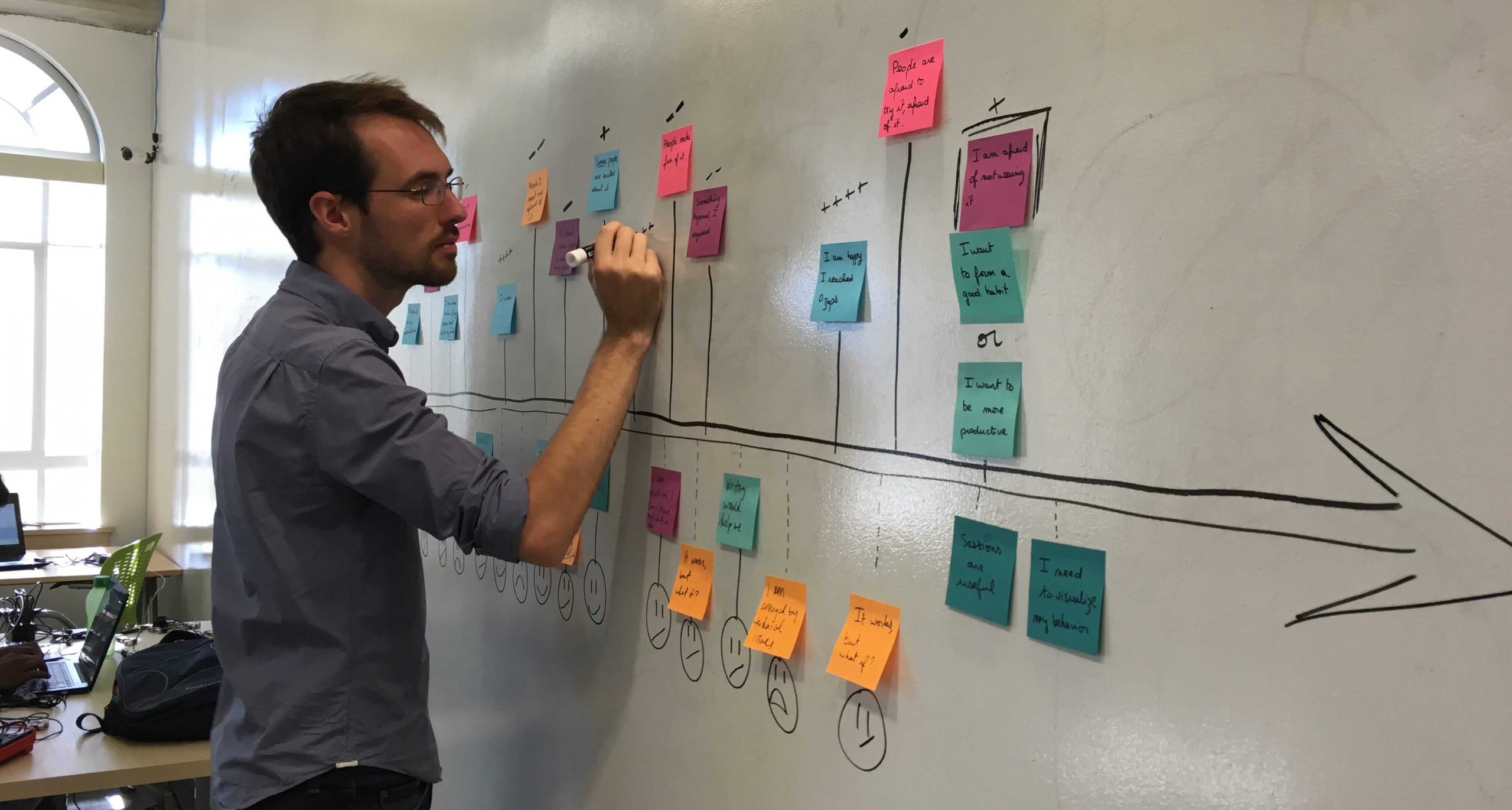
The big part of my work here is to blend all of the information I get into an actionable list of features so we can prioritize what to build next. This usually starts by reading absolutely all the answers and comments in the surveys on an excel spreadsheet, then putting tons of post-it-notes on a wall, a bit of drawing on a whiteboard, and a nice file I can share with the rest of the team.

Here is a “User Journey”, it displays what an average user is experiencing over two weeks using Pavlok and how it affects their emotions. In just a glimpse, you can see that I have some work to do to make sure the entire experience is in a green spot. Good thing that I love my work — yay! –

One of the latest cool examples is that since the October app update, we have a survey that regularly asks our users what habit they are doing. By gathering this info, and for the first time in Pavlok history, I can see what our users are doing, and how it is evolving! I found out that the Pavlok can be used in many more ways than I expected at first and that people can get really creative in what habit they stop or start with the Pavlok. The latest that surprised me? “Stop Eating Meat and Dairy”. That was unexpected and inspiring to see that some people use Pavlok to have a broader impact.

Ideating

Once we figured out what to prioritize and to work on first, the next step is basically to get a little crazy and build many different options. This requires me to find inspiration from what our users like, what apps are doing it well, what our brand is and where we want to take it. Every day, there are awesome new apps that help people changing and tracking their habits, but very few have an actual device. The very interesting step for me is to make sure that we help our users change their habits by having an easier way to use the Pavlok daily. With that in mind, whether it is on paper, on a white board or directly on Sketch (a design software), I create different options of the feature we want to develop.

Reviewing and Testing

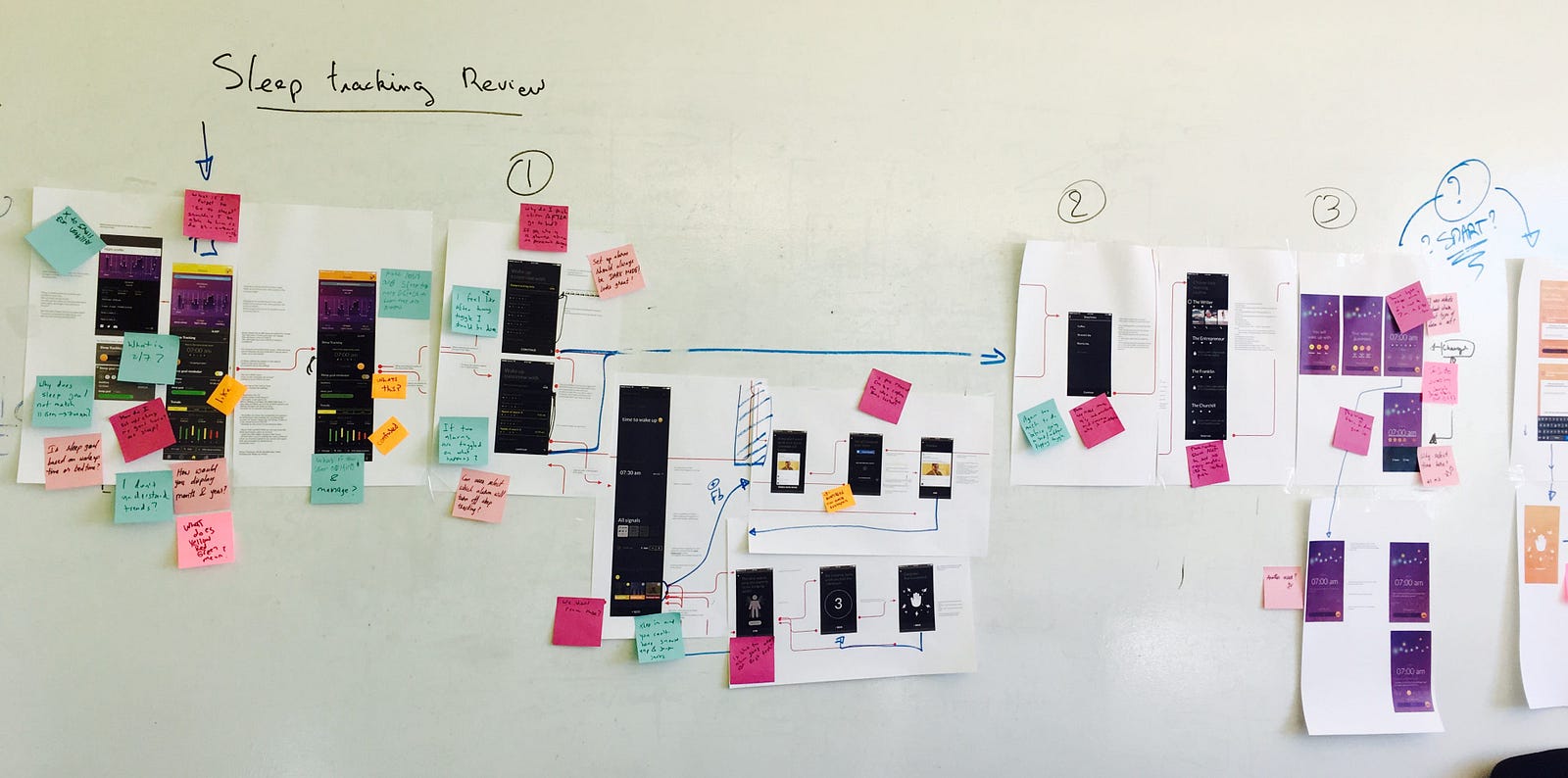
I try to have the Pavlok team review what I am building on a daily basis. But for the big new features such as “Sleep Tracking” I invite the entire team for a full design review session. I print all the screens, put them on the walls and ask the Pavlok team to write comments and questions directly on the designs. It is very helpful to start narrowing down options to make the design easier and clearer for the users.

Once we narrowed the design to one solution, I create a clickable prototype on InVision. It enables me to build a fake app that users can interact with almost as if it was a real one.

This is how I can detect that some people cannot complete certain tasks in the new flow, that features can be hard to find or to understand. It is usually the most stressful and exciting moment as it is the first time that people see the new feature and share their honest feelings about it! It is always, always insightful and helps us improve dramatically from a first design to the latest.

“The Importance of User Testing”

For example, users tend to review their habit at night, and they want to have more of a privacy feeling. So we decided to switch the app to a “dark mode”. We call dark mode the style where the text is white over a dark background. It allows users to create a more intimate feeling and it is more comfortable to read at night. My first version of that dark mode was a very dark blue background. And to be honest, it was kind of sad and too serious.

In the December 31st release, you might have seen that we offered a more uplifting version of the dark mode style. Why? This was all due to user testing. Users are attached to the Pavlok brand and the promise to quickly change their habit in an unexpected way. The Pavlok brand is joyful, unexpected and definitely not too serious. While testing the dark blue version people would say: “But I don’t understand why it is so dark, I am changing my habits, it should be uplifting!” And this is how I decided to make the jump to what you have now.

The next cool step in that process will be to allow the users to choose and customize their own theme. I can’t wait to offer that option!

If you agree, don’t hesitate to support it in our new Trello board at the end of this article!

Build with the software team

Once I iterated on the designs and the “user testings” go smoothly, I start to involve the software development team more. Because yeah, somebody eventually has to build it! We are a small team of 5 people working at the interface between the app development for both iOS and Android and the device firmware. This is a lot of work to be carried out as we have to tackle so many aspects at the same time.

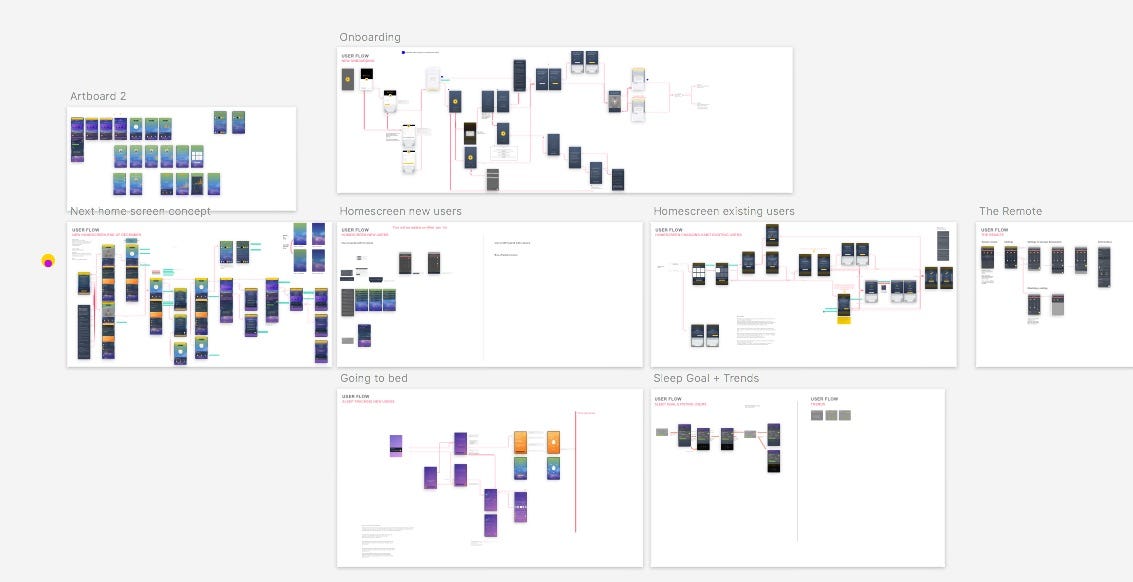
My work ends with the document I share with the software team. It is a flow of all the screens I have made. A nice compilation of a site map and a user flow with the descriptions of the interactions and all the assets they need to code, from fonts, to pictures, to frames for animated icons. Together we break it down to whatever steps are necessary to build the design, all the things that we have to create on our servers and on the app. We work closely together to make sure that we are building something we believe in and that corresponds to our user needs and wants.

The current development team ❤️

Now, it is your turn!

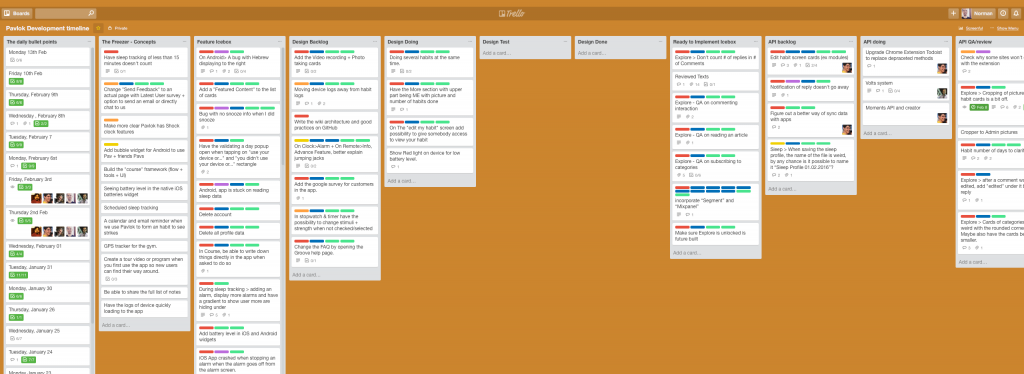
Thanks for reading our UX Pavlok story. You can now decide what feature will be built next! We are launching our open feature developement here. You will see what features are being considered, which ones are planned and the ones we are working on. We are working hard to create the tools and features that make the experience with the Pavlok better.

Go right there to our public Pavlok Feature Development https://trello.com/b/wXOGl4rC

Support the features you want by commenting on them! Tell us what you would like to have to improve your Pavlok experience, I told you, we read all of your comments!