Since founding Pavlok several years ago, we have literally seen hundreds of successful use cases with our Pavlok wearable.
While we’ve covered how Pavlok has helped users stop smoking, wake up on time, and be more productive, today I wanted to share a few unique ways to use Pavlok 2 that you may not have thought of.
Beyond The Zap
While Pavlok was founded on the principle of administering a light shock to reduce destructive behaviors, the beep and vibrate features are just as powerful! With three options to choose from, there a nearly endless amount of applications. Not only can you reduce your bad habits, but you can also use the Pavlok 2 as your personal assistant for reminders as well as a daily awareness tool.
Stop Your Child From Sucking Their Thumb With A Beep
Thumb sucking is a habit that is formed from an early age. But getting the little ones to break that habit doesn’t come easy. Of course, the Pavlok 2 zap feature is not suitable for a young child, but using the beep and vibrate feature can be just as effective.
Thanks to Pavlok 2’s new and improved motion sensor technology, you can have the Pavlok 2 beep every time your child brings their hand close to their mouth. The beep or vibration can be programed however you wish. After just a few weeks you should start seeing a noticeable improvement in thumb sucking reduction.
Public Accountability
With the Pavlok 2 it’s easier than ever to be held publicly accountable for your goals. For example, you can set up a system to make sure you write each day. Or you can set other specific goals for yourself while Pavlok holds you accountable.
Let’s say you’ve committed to going to the gym 3 times a week. With our IFTTT integrations, you can make it so you MUST check in to the gym location Monday, Wednesday, Friday. If you don’t “check-in”, a link to zap you is automatically sent to all your social media services with the text
“I didn’t go to the gym today. Zap me!”
It’s easy to succumb to excuses when no one is watching. Pavlok 2 ensures you stay on track.
Drop And Give Me 10
Even if you’ve formed the habit of going to the gym on a regular basis, sitting at your computer for 10-12 hours a day isn’t doing your health any favors.
One way to ensure you take a few breaks to get up and move is by setting several reminders on your Pavlok alarm throughout the day. When it goes off, simply stand up do a few jumping jacks or if you’re feeling extra adventurous knock out a few push-ups in the office.
Your body will thank you.
Drink Your Water!
The benefits of drinking enough water are undeniable, given the majority of Americans suffer from varying degrees of dehydration.
You can use the Pavlok 2 multiple alarm feature to remind you when to drink water throughout the day. Keep a bottle of water at your desk and when the vibration goes off just take a sip.
We’ve had Pavlok users effortlessly double their water intake without making any other drastic changes in their daily routine.
Earn Volts!
One of the most exciting developments with Pavlok 2 and our brand new Pavlok Core app, is you are now able to earn our in-app currency Volts, for performing certain behaviors.
Not only will you reap the benefits of building healthy habits, but you will also earn Volts that you can use to purchase app upgrades and other goodies within the app.
Earning Volts is as easy as checking in daily, doing jumping jacks and disarming your alarm at a defined time, or dozens of other positive behaviors throughout the day.
Want to go through one of our premium habit change courses? Use your volts to dig in.
Want to vote on our future integrations and features? Volts gives you a say.
While we will be sharing more about the Volts ecosystem shortly, let’s just say earning and collecting Volts will totally be worth it. 🙂
Pavlok 2 isn’t just the best habit change wearable on the market; it’s the only wearable that will reward you for good habits.
With just a beep, zap, or buzz, the possibilities are endless.
Available Now: Reserve Your Pavlok Rise On Indiegogo
If you’ve been following us at Pavlok over the last few months, you’ve seen us share the power of having a morning routine.
And after over a year of hard work to the Pavlok community, we couldn’t be more excited to announce the launch of Pavlok Rise on Indiegogo — the newest addition to the Pavlok family.
If you’ve been following us at Pavlok over the last few months, you’ve seen us share the power of having a morning routine.
And after over a year of hard work and listening to the Pavlok community, we couldn’t be more excited to announce the launch of Pavlok Rise on Indiegogo — the newest addition to the Pavlok family.
Introducing Pavlok Rise
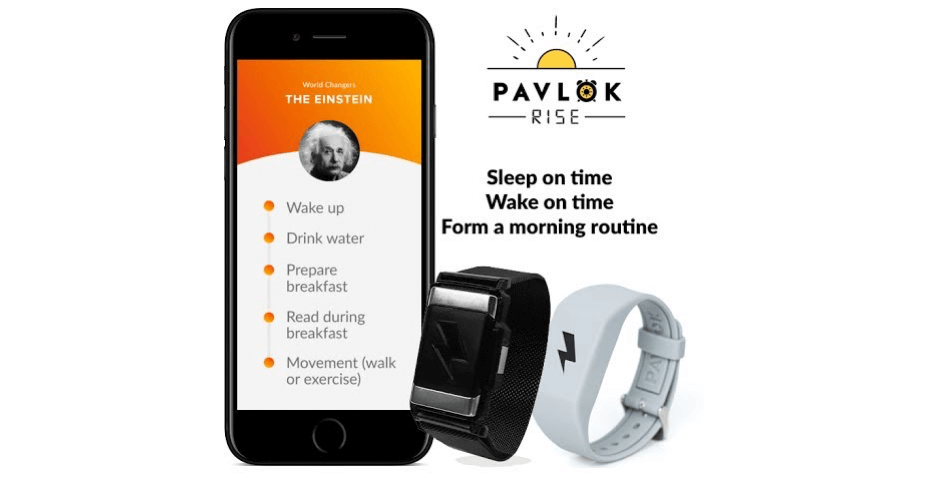
Pavlok Rise is the only wearable and software combination to help you get to sleep, wake up early, and form a productive morning routine.
For starters, be sure to check out the official Pavlok Rise video on our Indiegogo page and learn more about what Pavlok Rise has to offer.
We also wouldn’t be where we are today without the incredible support of the Pavlok community. For our campaign, we’ve gone out of our way to offer some amazing perks to those who wish to support Pavlok Rise during the Indiegogo launch. Some of the perks include…
You’ll be the FIRST to get your hands on the Pavlok Rise.
When you order on Indiegogo, regardless of which perk you choose, you’re guaranteed one of the best deals that will ever be available for Pavlok Rise.
Be a part of Pavlok’s DNA – One special perk gives you the opportunity to help us develop the Pavlok Rise’s gesture recognition for our sensor core technology (+ you’ll get the hardware two months before everyone else.)
To celebrate, I’m going on Facebook Live @ 3 EST today to answer any questions you might have and share our vision for the future.
Can’t wait to see you there.
xoxo
-Maneesh Sethi
CEO of Pavlok
P.S
Already A Pavlok User? Have Questions? Don’t Worry We Have You Covered.
We’ve created a special page sharing exactly how Rise is from Pavlok and Shock Clock. Whether you choose to upgrade or not, you’ll always be able to use your original Pavlok and Shock Clock.
Twice a month our engineering and development team share the latest updates with all things Pavlok. We like to give the community an inside look at what’s going behind the scenes, and we’re super excited at some of the newest features and updates.
Hope you enjoy the inside look at what we’re building…
Take it away, John and team.
—
This month’s release of the Pavlok app is all about building a better infrastructure and measuring the user journey. Our goal is to make sure things just “work.” In every decision we make, we want to make it easier for you to get the most from the app — aka build and improve your habits.
We spend a ton of time working hard to understand how the Pavlok community progresses through the app, and what works to keep their habits in check. We love seeing our users have HUGE transformations in their lives and we aim to make the Pavlok app the best resource around.
Our latest update won’t look much different from a UI (User Design) perspective, but we have added significantly more function in regard to analytics and actionable insights from that data. Moving forward, we want to help you along the path of habit transformation with real-time feedback and suggestions.
On the infrastructure side, our back end boys, Igor and Rafael, have been busy constructing an automated testing framework that performs full regression testing on every build. In plain English, they make sure the app runs as you’d expect. There’s nothing worse than a helpful app that struggles to work properly.
Here is a rundown of what is new in this release:
Analytics
Crash detection
Bug fixes
Android memory optimizations
Intercom fixes
Push notification fixes
Battery indicator fixes
Grammar Updates
For our coding readers out there, you know that continuous integration is a best practice for making sure an app works time and time again. I am excited to say that we are well on schedule with this release and can’t wait to share it with you. We’ll be testing dozens of proof points to make sure there are no bugs or surprises.
With the new update, we also fixed a few old bugs (thank you Pavlok community for letting us know!) There were 7 people these bugs affected in the past, but we are also happy to report we have patched things up successfully. One of the biggest improvements we’ve made recently is the communication between the app and Pavlok hardware — no more freezing or hangups.
We are always testing on how to make it a better experience for our users, and constantly releasing new iterations of the app into the wild.
Before we go, we wanted to share a few useful features of the app.
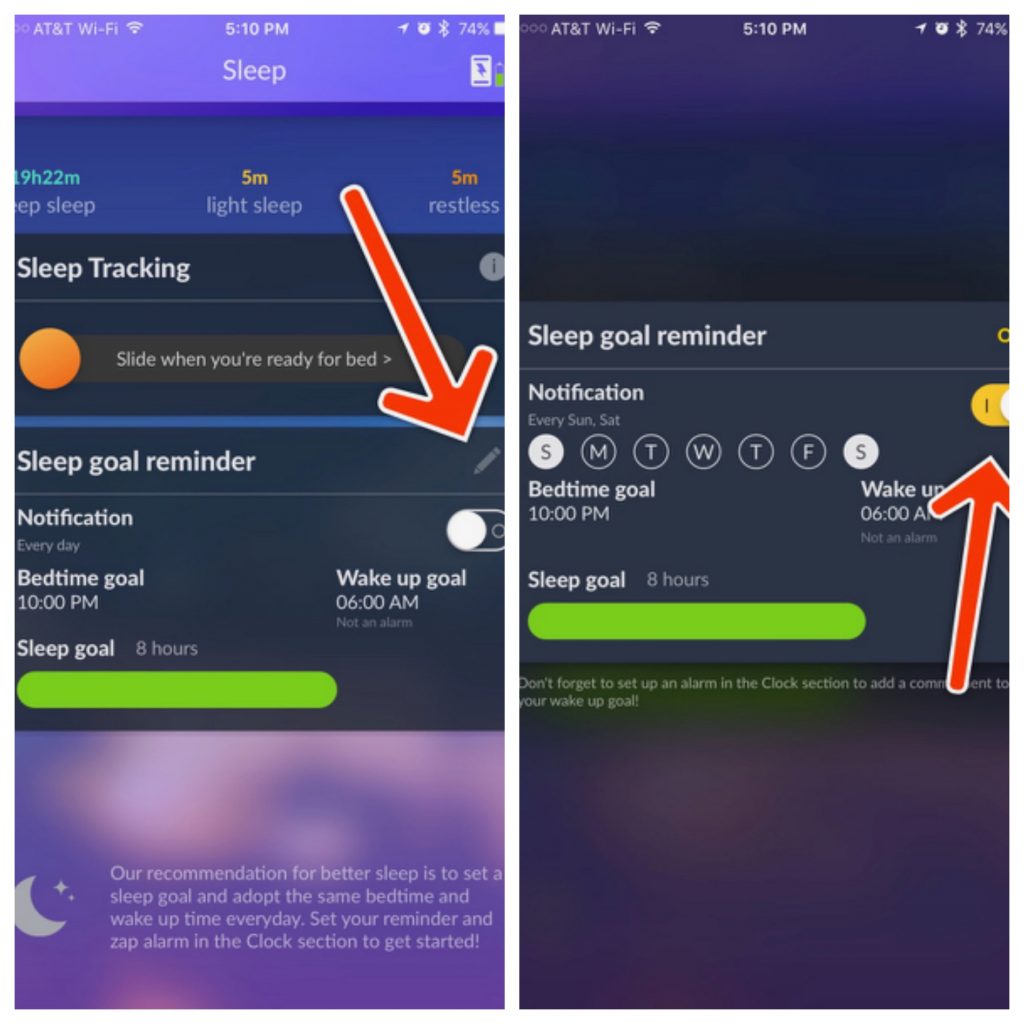
You can set a “Sleep Goal Reminder” on the Sleep page by clicking on the edit pencil icon as shown below: There you can turn on notifications and set up the times to be notified. Tap the wake up goal to set your desired wake up time to properly calculate the sleep goal.
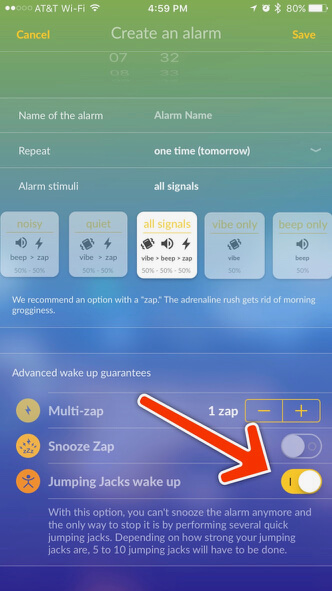
When setting up your alarms, you can also choose the stimuli patterns and even program your Pavlok to require you to get up and do 5 jumping jacks (some refer to these as “Star Jumps”). See the screenshots to locate the proper controls!
We are very excited about the progress of the app, and even more excited about some exciting new features and releases in the very short future.
Here’s some of what you can look forward to coming your way soon.
Pavlok is changing its interface into a Launcher style (Apps within the Pavlok App)
Adding better onboarding for individual habits and use cases
Improved graphics and tracking capabilities
Much more
We love hearing from you, so please reach out with your suggestions and feedback, it helps us make the best product and app possible.
That’s it for the latest edition of Inside Pavlok.
—
Thanks for the awesome update John.
As you can see, we’re super busy here making Pavlok the best resource and tool to help you improve your habits.
And while we’ve had some pretty significant updates recently with the app, the best is yet to come.
If you joined us for our morning routine webinar last week, you got a sneak peak…
But here’s a little hint in case you missed it — What is the most important keystone habit you can form before most people wake up?
We’ll be sharing more very soon…
-Maneesh Sethi
P.S Check out latest improvements on the Pavlok App. You can download on both IOS and Google Play (No Pavlok wearable needed.)
Introducing Pavlok User Bud Hennekes— Pavlok’s Newest Creator and Curator of Content
Today we’re super excited to announce that Bud Hennekes, one of Pavlok’s first ever beta users, has joined Pavlok as a curator and creator of content. He’ll be helping the Pavlok team produce content to help you get more out of your habits as well as highlight the success stories of the 1000’s of Pavlok users around the world.
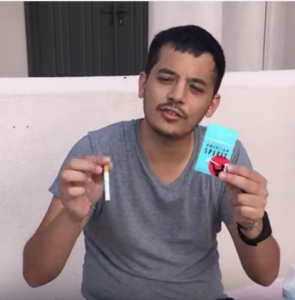
I first connected with Bud through social media 6 years ago and we’ve since become good friends. Bud first reached out in 2014 wanting to join the Pavlok beta program to help him kick the smoking habit he picked up while living in NYC and his results were nothing short of amazing.
You can check out some of his videos here and here.
Since first using Pavlok in 2014, he’s participated in a University of Massachusetts study on Pavlok’s ability to help quit smoking, been quoted in the New York Times and has used Pavlok to be both more productive and present. He’s currently using Pavlok to cut back on drinking ‘Monster.’
What I’ve enjoyed most about Bud’s journey is even through the ups and downs of habit change, he’s committed to continuing to improve and build habits that will help him live a happy and healthy life for decades to come.
Take it away Bud.
Hey fellow Pavlokians,
I’m thrilled to be here and a part of the Pavlok community. I’m fired up to share and create content to help take your habits and life to the next level, as well as share some of the awesome stories of our Pavlok community.
But first.. a little bit about me.
For as long as I can remember, I’ve always been fascinated by self improvement and getting the ‘most out of life.’ And of course, a large part of getting the most out of life involves having good habits and avoiding the ones that hold you back.
Unfortunately, even with the best intentions, bad habits can derail those plans. Maybe you know the feeling. I know I do.
In 2013, I was struggling to jumpstart my career in NYC. I was down on myself feeling anxious and depressed, and on top of that I had started smoking… up to two packs a day.
As you can imagine, that’s hardly “getting the most out of life.”
But no matter what I did, I couldn’t stop. I “wanted to..” of course, but the addiction was in full control.
I continued to smoke nearly two packs a day all throughout 2013 and early 2014 during my time in NYC.
In mid 2014 I started taking a hard look at where I was at in life and I knew I wasn’t happy with the path I was on.
I was miserable both personally and professionally, and needed something to change. So after relocating from NYC back home, I knew my first step would be to quit smoking.
It was perfect timing.
Pavlok had just launched their beta program and I applied and decided to give it a go. Fortunately, I was accepted because that changed the course of my life forever.
In a period of just a few weeks my smoking consumption virtually disappeared. I no longer had the urge to smoke. I went months without cigarettes even crossing my mind.
I felt good about myself for the first time in a long time.
Through that one change, I started thinking about other habits in my life in an entirely different way. And the snowball effect was born.
And almost out of nowhere…
I started meditating, going on daily walks, drinking more water and taking habit change seriously.
And not surprisingly, my life then started to get exponentially better. I felt unstoppable.
Now, several years later, I’ve replaced “being a smoker” with “being a student of habit change” and I couldn’t be happier with the track I’m on.
By one simple decision, I’ve been able to make incredible strides and improvements in my life and I’m certain that started with me using Pavlok.
Now don’t get me wrong, even with Pavlok, habit change is a life long journey. You’re going to mess up, you’re not always going to get it right.
I’d be lying if I said I hadn’t slipped up and had a drag of a cigarette or two after a night out drinking with friends on occasion. But I’m no longer a slave to my addiction.
I no longer believe I’m ‘powerless’ change my habits. I know with the right tools, mindset, and support I can change any habit I want, and that’s one of the most empowering feelings in the world.
I know what it’s like to be stuck. I know what it’s like to feel like you can’t change. I know what it’s like to feel frustrated, down, and defeated.
But I’m living proof that things can get better. You can take control of your habits and your life with the right approach.
Again, it won’t always be easy. But if you put in the work and stick with it, you can truly transform your life.
I may be biased, but if you’re looking to change your habits, I highly recommend you give Pavlok a try.
It just might change your life. It surely changed mine.
-Bud Hennekes
Maneesh again.
This is easily one of my favorite “Motivational Monday’s” in a long time. Hearing stories like this is what makes the long hours and hard work here at Pavlok worth it.
We mean it when we say we want to change the way the world views habit change.
And with that…
We have some great news.
After we briefly ran out of stock in April… Pavlok is back in stock for a limited time.
We’re not joking when we say we don’t know how long this will last.
So if you’ve considered getting a Pavlok to help you change your habits for life, now is the time to do so.
This is part of our Inside Pavlok series—a series of blog posts by the Pavlok team talking about the story of how we work. I’m excited to introduce the story of the Pavlok hardware by our Mechanical Engineer, Steve Trambert. This post is dear to me, as it tells the history of Pavlok from inception (ahem — slap in the face) to our current stage. Hardware is one of the most difficult projects a person or company can take on, so I feel strongly while reading the words below.
I hope you enjoy Steve’s story as much as I do.
Hello! I’m Steve Trambert. I’m the mechanical engineer on the Pavlok team. I design the mechanical enclosures, packaging and accessories for Pavlok. I also manage our supply chain, maintain our relationships with vendors, and act as an informal Director of Hardware. That might sound like a lot, but – as I’m sure you’ll learn from these introductory team blog posts – we all wear quite a number of hats here at Pavlok. Often 4 or 5 stacked awkwardly atop one another. Welcome to the exciting life of the entrepreneur!
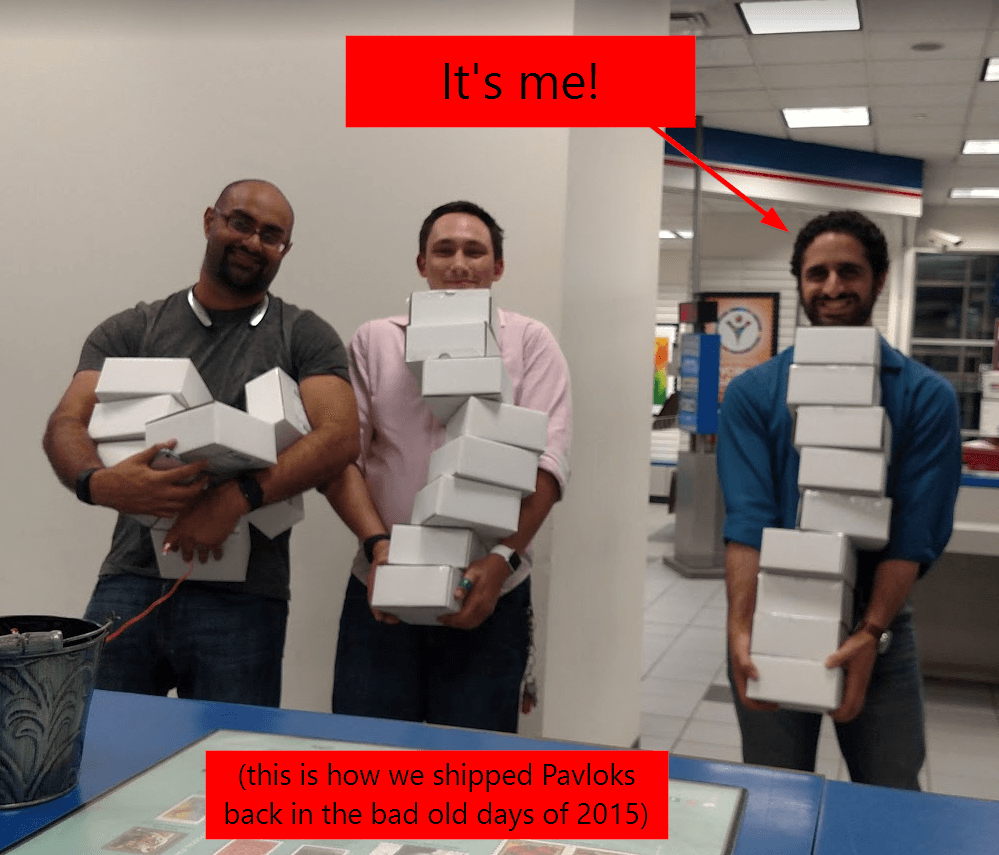
The First 25 Final Pavloks We Shipped — 8/7/2015
In my free time I like to kayak, ski, tinker with 3D printers, and nerd out over foreign policy. I’ve actually got a second bachelor’s degree in International Relations. That’s the amount of nerd I am.
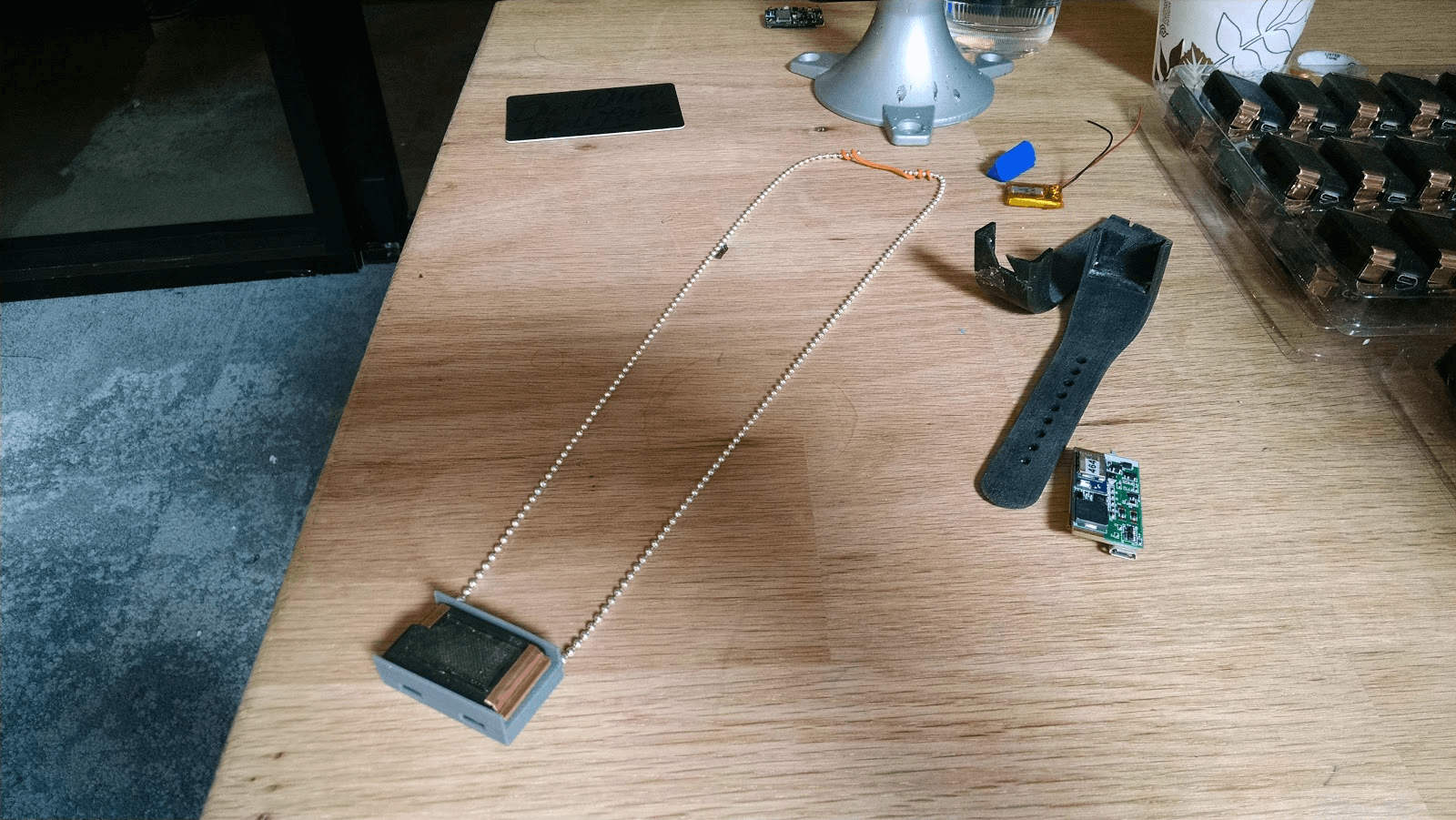
I’ve been on the team here for almost 2 years now. In March, 2015, I watched Maneesh speak on a panel of experts at a wearable tech event, got a beer with him afterwards, made him a 3D-printed prototype necklace two weeks later, and was then immediately invited to join the team. The key to getting a job at Pavlok is a demonstrated ability to inflict pain on Maneesh.
The original necklace prototype that got me my job
An Interview I did in 2016 about my time at Pavlok.
Enough about me though, let’s talk about something way more interesting… Pavlok history! Specifically my area of expertise – PavlokHardwareHistory!
As a young company, the saga of Pavlok thus far has been passed down largely through oral tradition. Think of this as my humble attempt to start preserving that history, because some of this stuff is quite cool!
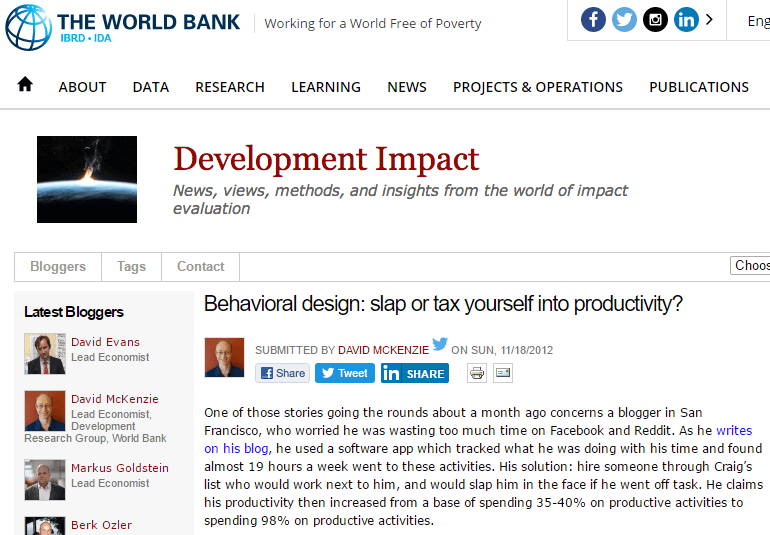
It seems fitting that Pavlok’s history be first committed to writing in the form of a blog post, because the history of Pavlok really began with a blog post:
First Stop on the Pavlok Hardware History Tour: Kara
Meet the Pavlok hardware in its very first iteration. Her name is Kara, and Maneesh hired her on Craigslist to slap him.
You should absolutely feel free to read The Blog Post yourself, you can find it here under Maneesh’s old Hack the System masthead. Suffice it to say, Maneesh discovered – and demonstrated with cold data – that his productivity increased significantly when he had someone with him whose job was to keep him on-task and accountable to his goals.
We’ve always been an odd company, it seems fitting that we have a suitably odd origin story.
So, Maneesh had his lightbulb moment — what if he everyone could get slapped in the face? Unfortunately, slapping doesn’t scale, so he hit the lab with the next best thing: a dog shock collar. The idea: hack it to zap him whenever he went on Facebook. He called up a friend — Dan Kaminsky — to rig it up with an Arduino and some code.
The only thing that might make this origin story better is some footage – and we’ve got some! Take a look the very first night of Pavlok’s existence: https://youtu.be/SQW9bqw5O1E?t=16s
Thus Pavlok – or, more accurately, Behavioral Technology Group – was born. Maneesh began pulling a team together with the goal of inventing a tool to help people backstop their willpower.
Second Stop: Early Days
Here there be monsters; the earliest days of Pavlok are shrouded in a degree of haze and mystery. The folks who were on board at this point experimented with all sorts of ideas that you’ve probably never heard of. For example, one of Pavlok’s early patent applications was for electronic shoelaces that wouldn’t unlace until the wearer met their step goal. Another was for a wristband that would literally lock to your wrist – this is where the “lock” in “Pavlok” comes from.
Ultimately, however, the team settled on the Pavlok concept that we know and love today. Much of this growing-up was facilitated by our entry into Bolt. Bolt is a startup accelerator that invests specifically in promising young hardware startups. They lent us space to work in their Boston office, access to engineers and experts, and an excellent community of fellow hardware entrepreneurs.
Bolt Office Intro Video
Third Stop: Prototypes
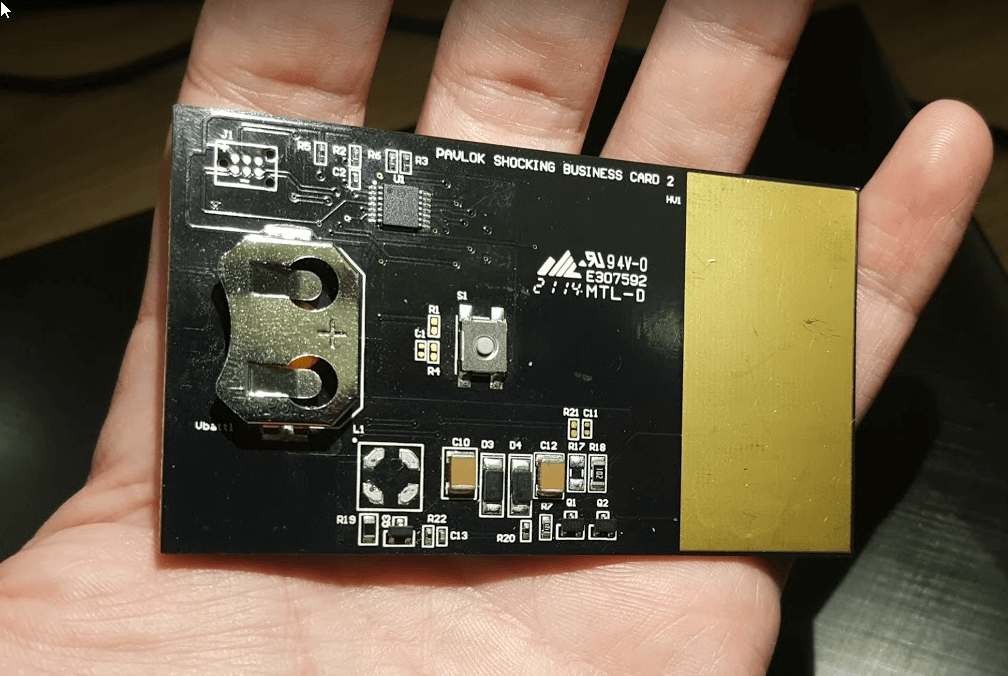
Do you like baby photos? There’s something magical about seeing what your full-grown friends looked like when they were awkward toddlers with a lot of learning to do. That’s what the first Pavlok prototypes were like. Here are a couple baby photos of Pavlok:
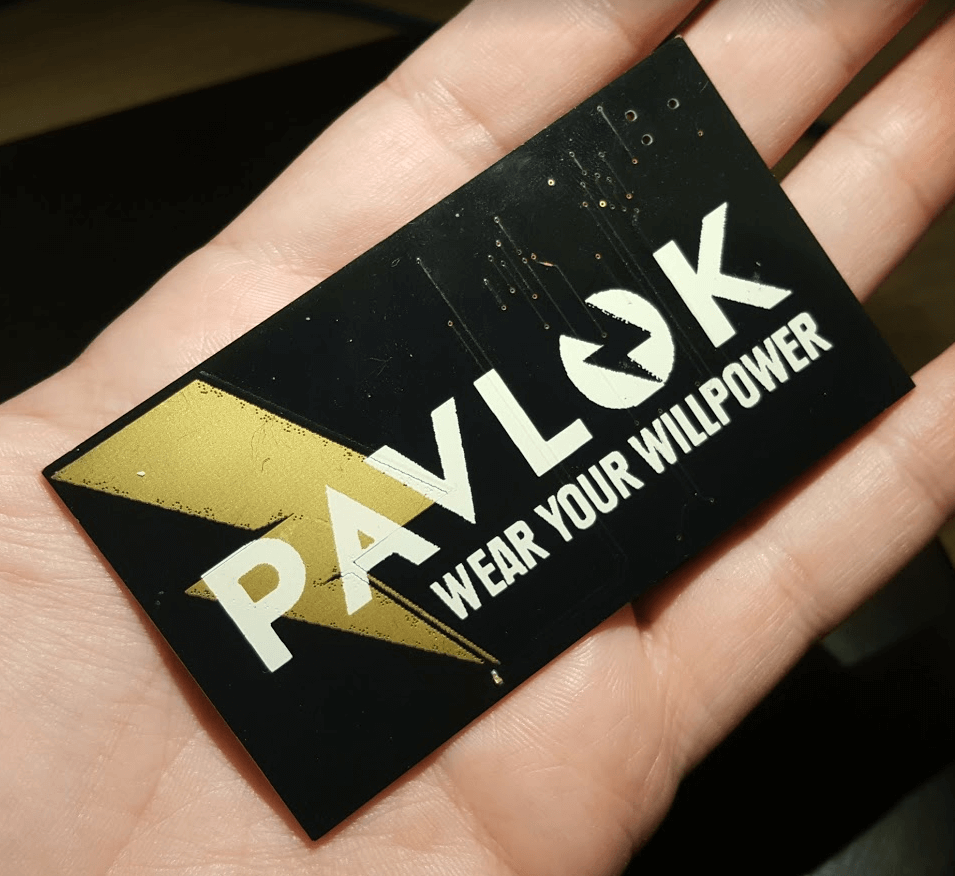
What you’re looking at is the very first prototype of our shock circuit. If you’ve got eagle eyes, you might notice something a little curious about the top photo – the tiny silkscreen text on the back of the circuit board says “Pavlok Shocking Business Card.” We figured that as long as we were making a prototype shock circuit, why not design it in the form of a shocking business card? The lightning bolt on the front and the big pad on the back serve as the electrodes. If you really want to make an impression at a networking event, you can hit the “shock” button on the card just as you’re handing it over to your latest contact.
We’re very mature.
The shocking business card was essentially “one half” of our original prototype. The other half was a second board, intended to test the rest of our rough electronics design – processing and bluetooth connectivity. You can see it in the “family portrait” photo later in this post.
Building on the lessons learned from those first prototypes, we built… *drumroll* the Alpha Unit.
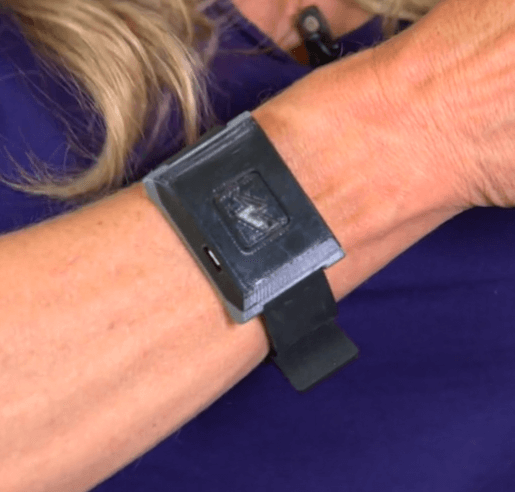
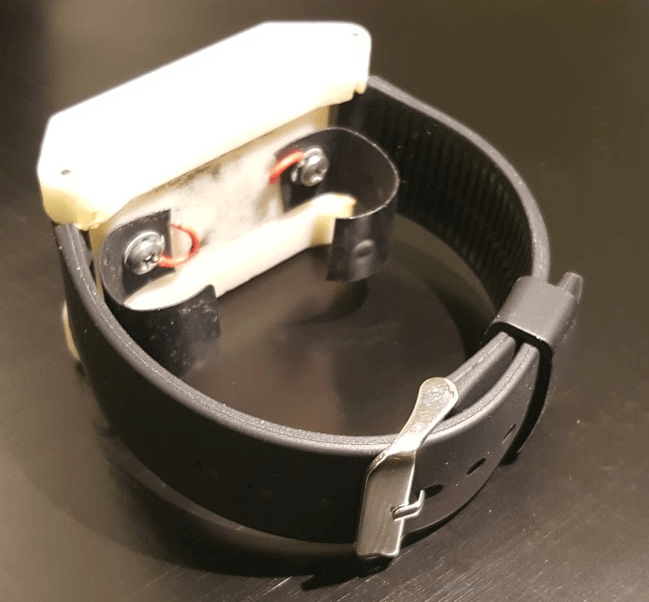
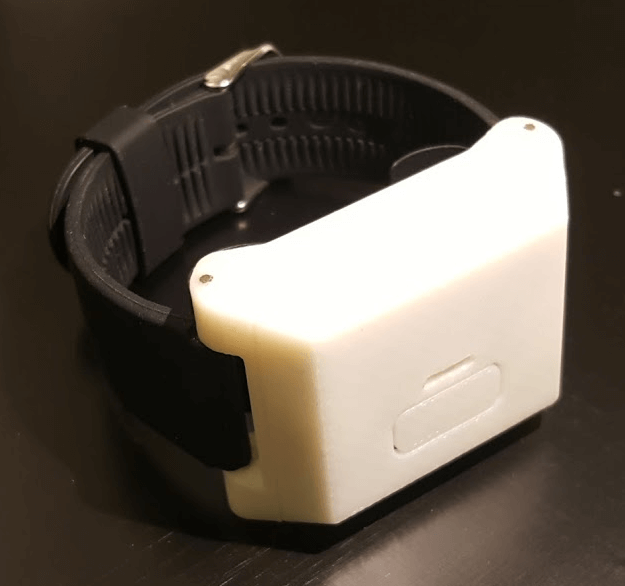
The Alpha was the first iteration of Pavlok that was truly wearable. These were big, clunky devices. They had some serious character though – each Alpha was individually laser-engraved with its own short-run serial number. Conductivity came through two strips of conductive rubber at the back of the device, which were fastened to it with wire and some scary looking screws:
There’s another interesting thing about the Alpha unit – it saved the company. Hardware R&D is an expensive proposition, and as a startup it can be difficult to cover your costs while you make your way from concept to mass production. In Pavlok’s case, we came to May 2014 with just 3 weeks of capital left in the bank. At that point we were still months away from being ready to launch our Indiegogo campaign. So Maneesh took a gamble. He hosted a habit-breaking webinar for about 120 Pavlok fans, and made them an offer – they could become our earliest of early birds by buying one of our Pavlok Alpha units. It came with coaching service from Maneesh personally, and a strong warning that the device was still very rough around the edges.
Maneesh earned us $30,000 in that webinar, and Pavlok stayed afloat. Pavlok shipped it’s first 25 alpha prototypes on July 31.2014 — exactly 364 days after the company was founded on August 31, 2013.
If you’re one of the super-early adopters of Pavlok who purchased one of these Alpha units, I just want to take a moment to say thanks. This was a case where your faith in the mission – and in us – literally kept us going. In addition, the feedback you provided allowed us to make the final mass-production Pavlok eminently better.
Also, you should shoot me an email! We don’t have many of these old dogs around, and we would love to buy your Alpha unit back from you to preserve as a piece of company history 😀
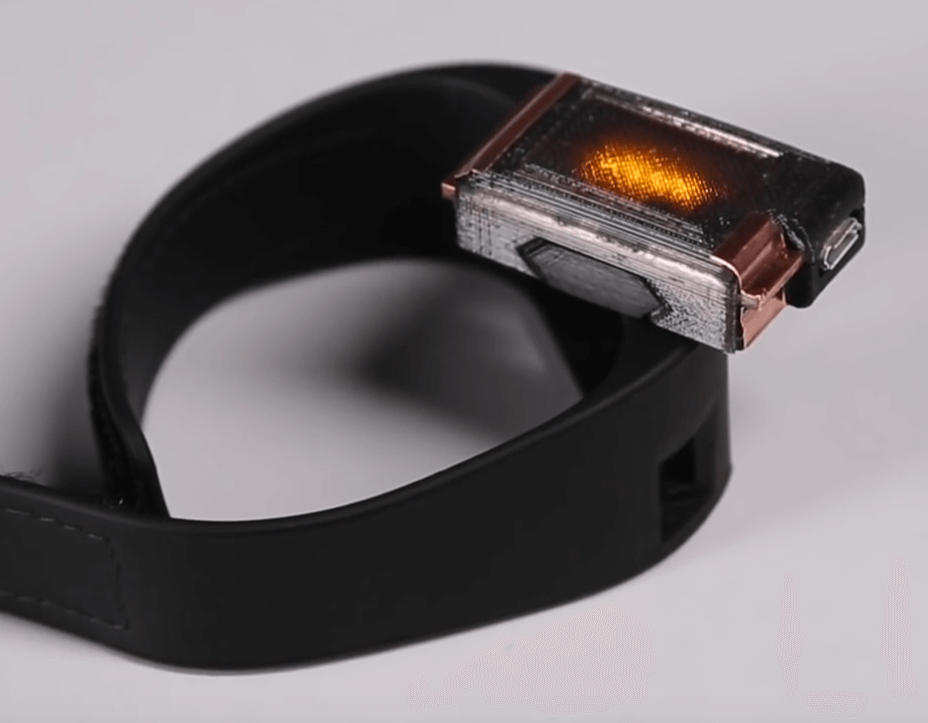
That last pre-production prototype that we built was the Pavlok Beta. Some of you might recognize it, as the Beta was the first prototype to see wide sale with Pavlok. We sold about 50 of them before our Indiegogo campaign, 300 more during the campaign, and a few more after the campaign. The new wristband was produced from silicone in a light-duty aluminum mold, and the enclosure was 3D-printed in our office on a Flashforge. The way it conducted was pretty interesting – it used copper tape, which we hand-soldered to two special pads on the board. Each unit took over an hour to build by hand. They were no fun to manufacture, but they do look pretty neat, don’t they?
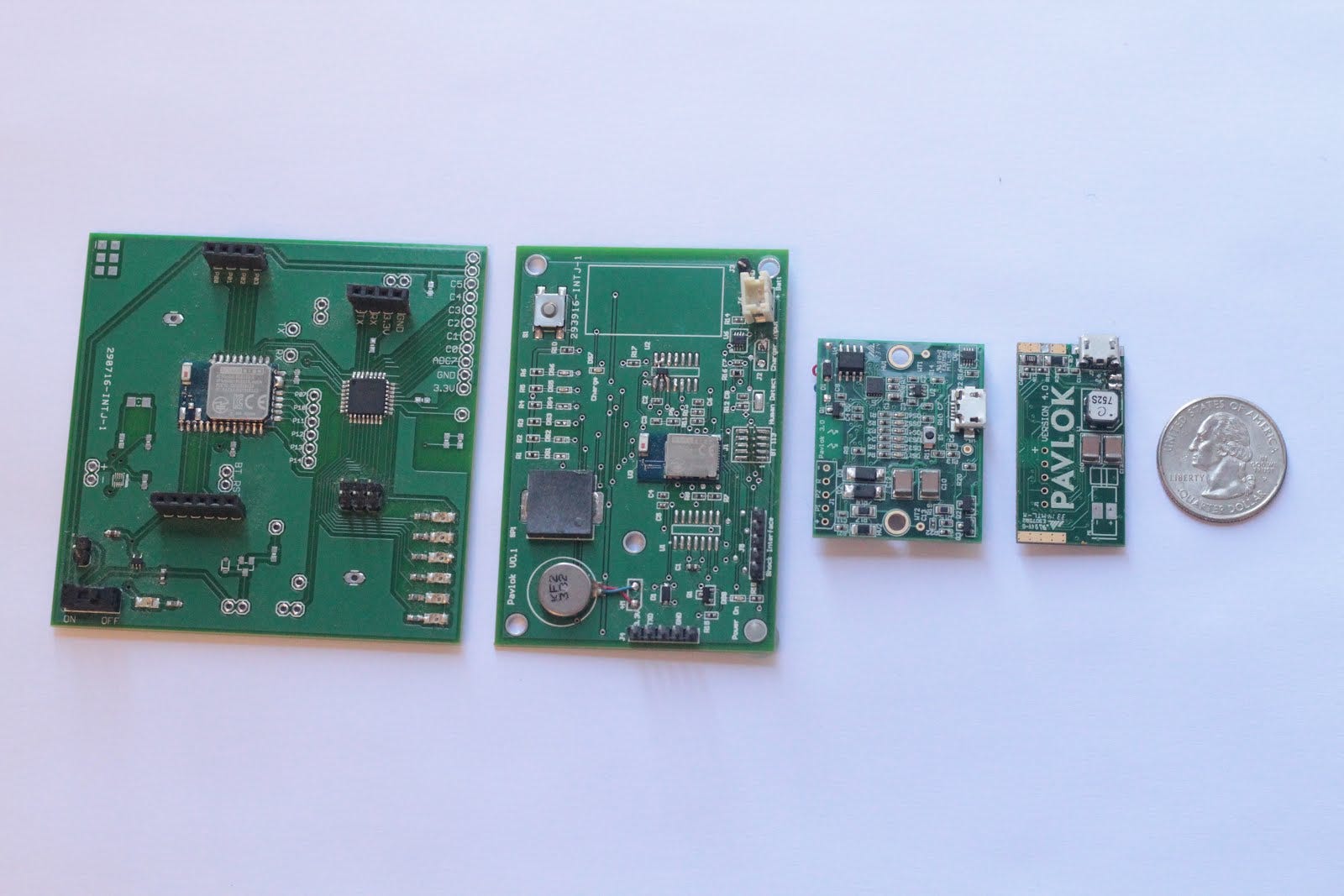
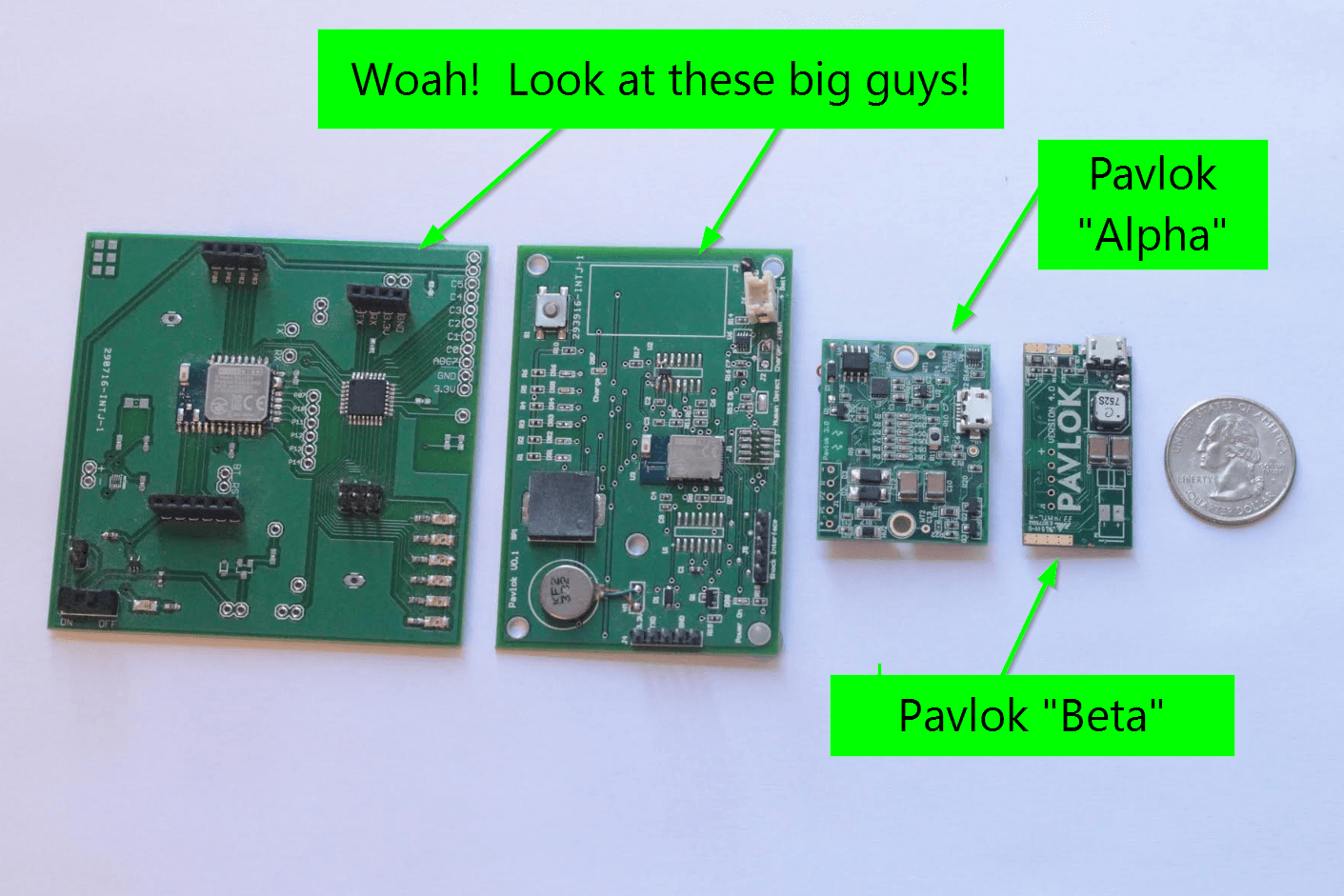
And if you’ve had trouble following along with the story of our prototypes, here’s a family portrait to help you wrap your head around the progression:
Here’s the Pavlok family portrait. The guy on the far left is more like a cousin – he’s a dev board for BlueGiga. Continuing to the right, you see a pre-alpha prototype, our Alpha board, and our Beta board.
Fourth Stop: Crowdfunding
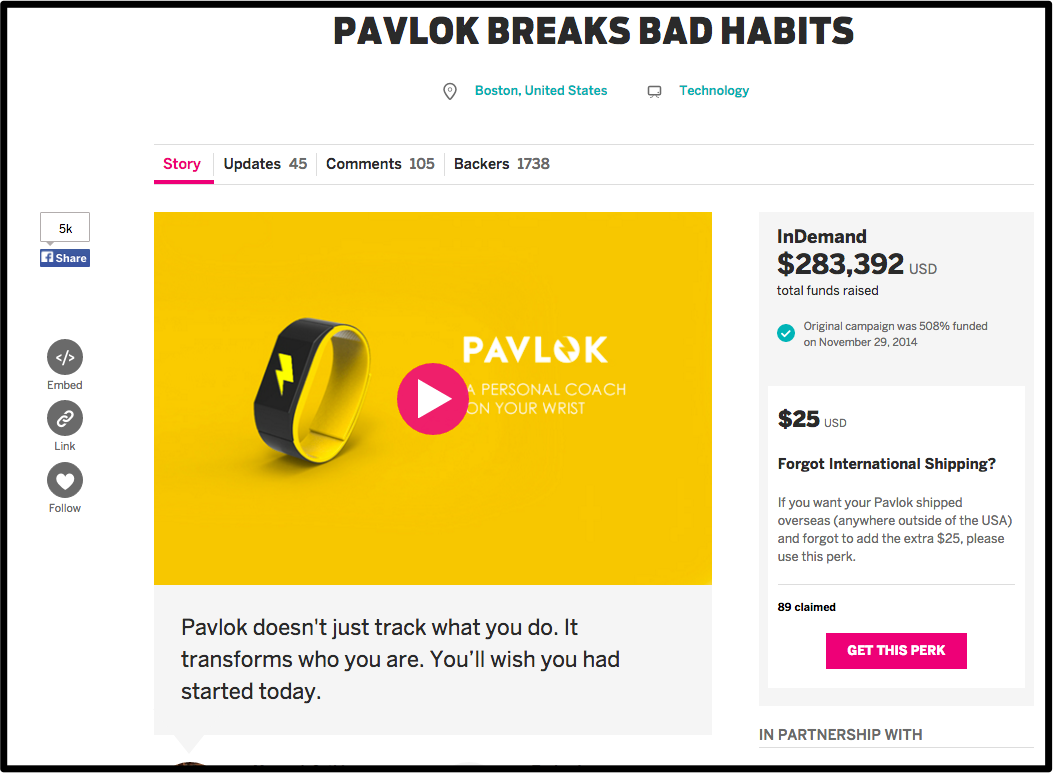
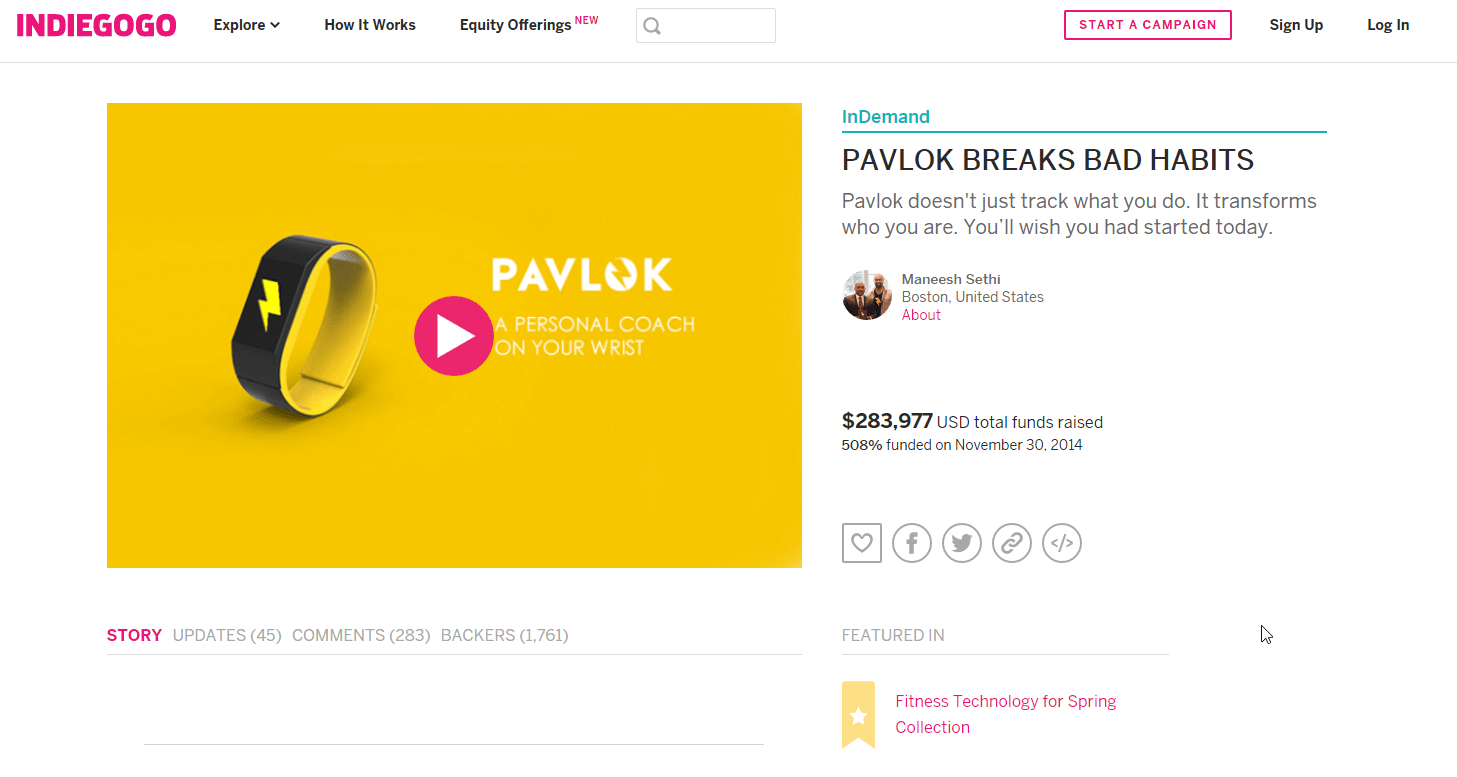
Woo! We made it to the crowdfunding stage – and boy did we make it. Pavlok’s Indiegogo campaign went live on September 30, 2014, and quickly met its $50,000 goal. In fact, by the time the campaign ended on November 30, we were 508% funded, with more than a quarter of a million dollars in backer funding. Feel free to check out the Indiegogo page for a small dose of primary-source history!
.
This is another moment where I’d like to pause to briefly thank our community. If you’re reading this, and you’re an Indiegogo backer, we’re all grateful to you for helping us get off the ground. We wouldn’t be here without your support.
We’re often asked for advice on how to go about launching a successful Kickstarter. In the words of Maneesh, our secret sauce is pretty straightforward: “If you want good crowdfunding publicity, make a product that shocks people.” We earned a ton of press simply by virtue of being odd.
We’re proud to be odd here at Pavlok. There are a million wearable fitness trackers out there, and studies show that they have almost no actual impact on user fitness. We make something truly different from anything else, and we’re happy to do it.
Last Stop: Production Pavlok
And now we’ve made it to the present… the Pavlok you’re undoubtedly familiar with, a device known to us as “The Production Unit.” This is the point in the Pavlok timeline where I come in 😀 I joined the company in March 2015 to get this guy into mass production.
There’s something interesting here; notice how I didn’t say that I joined the company to design the production unit, only to get it into manufacturing? That’s because I played only a minimal role in designing the Pavlok module itself. The true credit doesn’t lie with any mechanical engineer, in fact. It actually lies with our illustrious electrical engineer, Sasha Iuelu! He completed the design and ordered the first injection molding tool before I even joined the company. How did he do it? By buying a Mech E textbook and studying up. It goes to show you that anyone can break into hardware these days if they have the will to learn and fast internet.
Rather than designing the module itself, I designed the Pavlok’s wristband and packaging, and oversaw the selection of our manufacturing partners here in the USA and overseas. I also provided the team with a special sort of incentive to spur us on to ship our Indiegogo backer rewards:
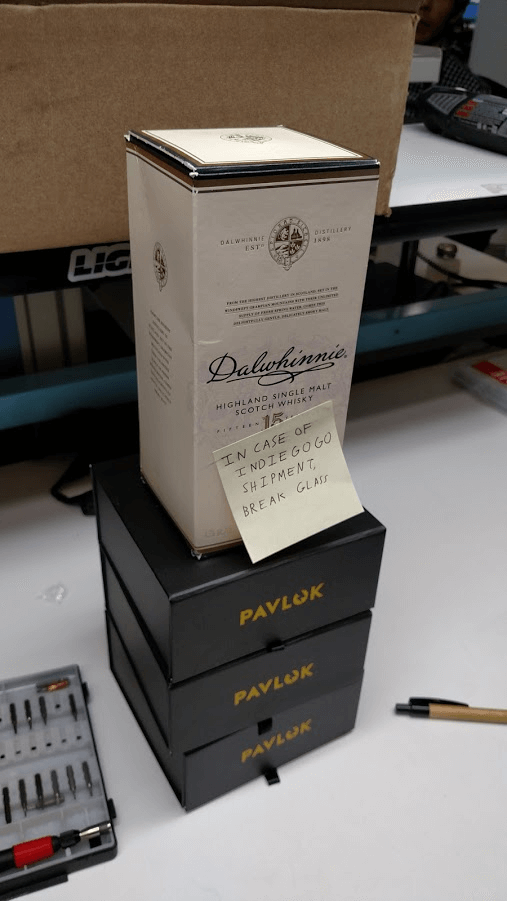
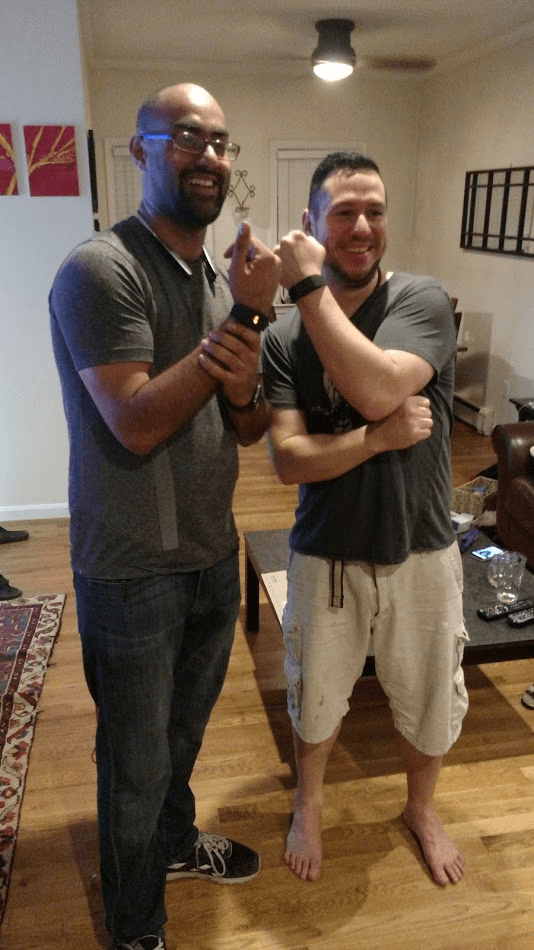
Speaking of shipping, that was an awesome night! The very first units went out on August 7, 2015. Daniel, Maneesh and I personally carried them to Boston’s late night post office. First, however, we took a detour to visit a backer who actually lived in Boston, to surprise him with a hand-delivered unit. Here is the very first Pavlok backer to receive their production unit.
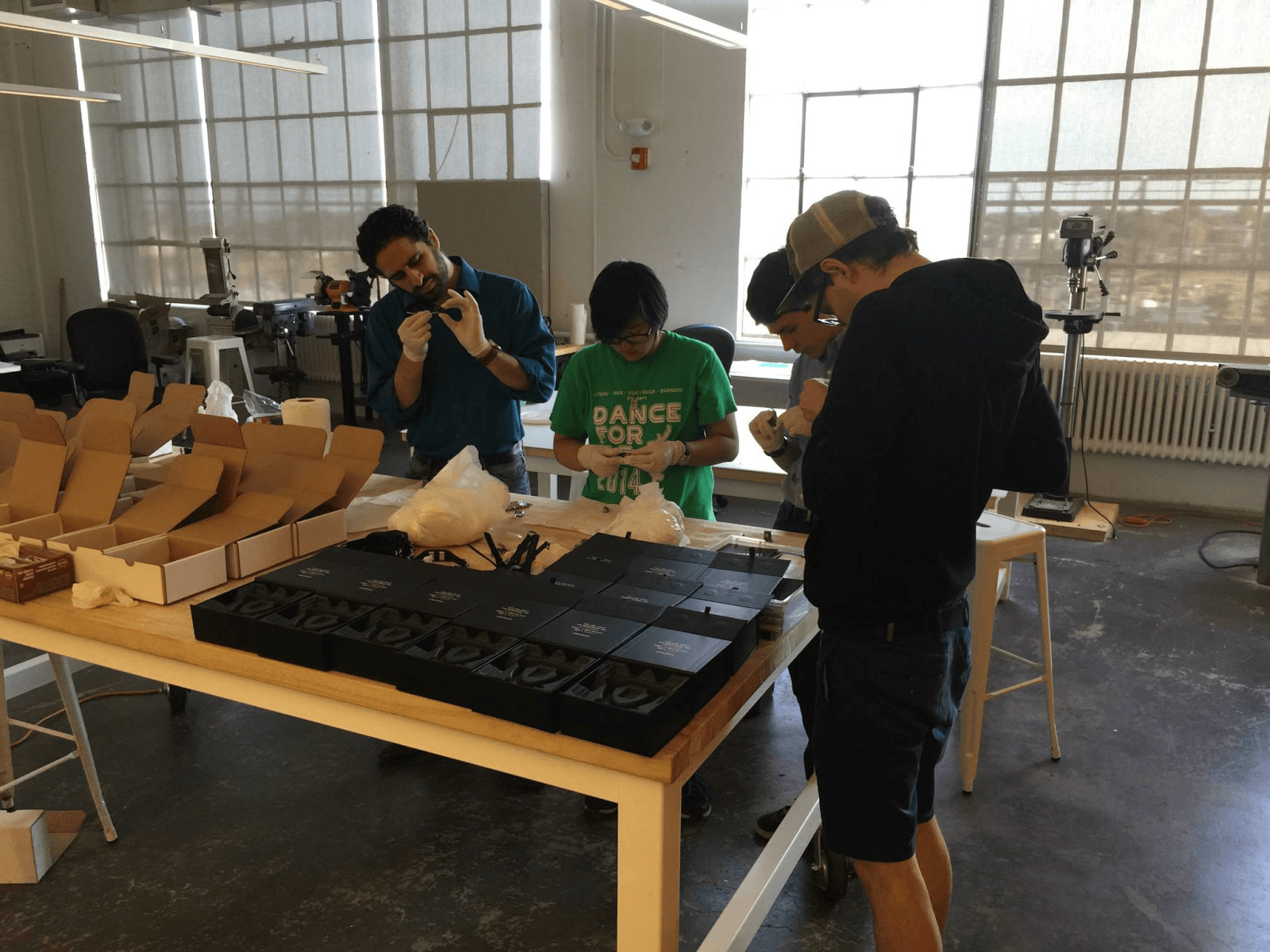
It felt great to fulfill our Indiegogo orders. This was an exciting time, but it was also tough. I had to put nearly $20k of company expenses on my personal credit card to buy all the parts we needed. Everyone pulled double-duty on the assembly line (though that part was pretty fun).
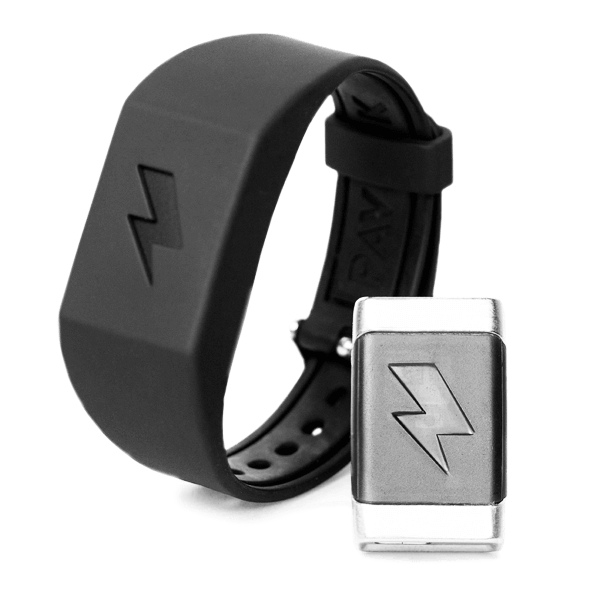
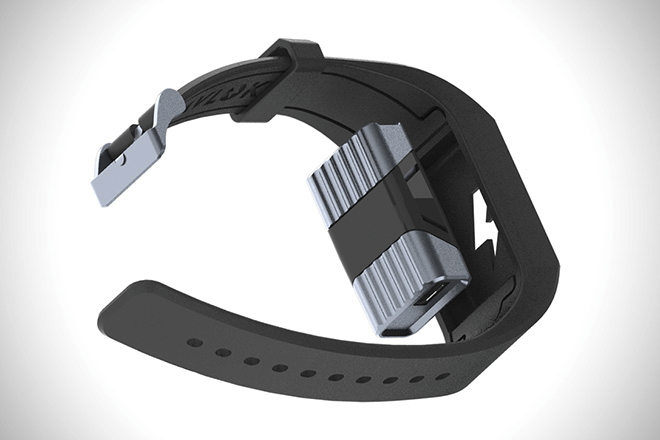
Let’s talk a bit about the production unit. Our final device is surprisingly simple, which is of course by design. The shorter the BOM (bill of materials), and the less labor time involved in assembling those components, the lower the manufacturing cost. The production module is comprised of an internal circuit board which slips into an injection-molded ABS “body” component (this is the black plastic piece in the middle with the lightning bolt). It’s secured inside by two die-cast zinc terminals, which attach to the body with snap-fit features. The terminals are plated with white bronze to give them their nice finish. White bronze allows us to achieve the attractive appearance of chrome plating, without having to forsake customers who have nickel allergies (the chrome plating process involves a layer of nickel).
We had trouble nailing that snap-fit in the early days, so – if you have a very old unit – it may well have been simply glued shut with E-6000 by one of us on the team. The very early manufacturing process also involved putting Kapton tape on a ton of components to insulate and secure them, but we’ve managed to improve the manufacturability to the point where none is required anymore.
There’s something that you might notice about both the production unit and the Beta unit. Unlike the Alpha’s, they’re separate devices that are removable from the central wristband. This offered us a number of advantages. For example, it allows users to pop the unit out of the wristband and pop it into a different color wristband or an alternate accessory like a necklace or belt clip. You can expect the first of those alternate accessories to appear for sale in the next few months, but I’ll save that deeper exploration of what’s-to-come for my next blog post 🙂
This seems like a good place to wrap up. It was great to meet you, and I hope you enjoyed this rough history of how Pavlok’s hardware came together. Stay tuned for future blog posts that dive into some of the more technical aspects of the design and manufacturing process that I glossed over here, such as how we found our manufacturing partners in the US and in China. And of course, a preview of some new hardware to come.
If you have any questions about or suggestions for Pavlok hardware, I’d love to hear from you! You can reach me at steve@wp.pavlok.com. Otherwise, I’ll talk to you again soon through this blog 🙂
This is part of our Inside Pavlok series—a series of blog posts by the Pavlok team talking about the story of how we work.
As the founder/CEO, my role has shifted since Pavlok’s inception. At the beginning (2013), the company was just me. I was all roles at all times. Now with 21 people (!!) on staff, my role has moved from being a doer, to being a leader.
I believe that a CEO’s job is four fold: 1) to make sure there is money in the bank, 2) to set the vision of what the product and company will become, 3) to hire the right people to get the right job done to execute that vision, and 4) to create the company culture that allows us to scale and grow in a positive and healthy way.
This article is a repost from late 2015, when we first began shipping our product. It’s fascinating for me to reread, to remember how we survived our original days pre-revenue.
I was in the original Bolt Class — one of the first seven companies. I was the only Bolt company (at least in the first cohort) to host a crowdfunding campaign during my tenure at Bolt, so I felt it necessary to tell our tale of Kickstarter and Debt.
Pavlok(main site, order site)was founded in 2013 with the goal of changing behavior. There are tons of wearables tracking what you do, but Pavlok is designed to change what you do. It utilizes Pavlovian conditioning (in the form of vibration or a mild electric zap) to permanently reduce cravings and break bad habits. Users use it to quit smoking, unhealthy eating, nail biting, obsessive / negative thoughts, waking up early, and more.
I had the idea in late 2012, and Bolt saw our initial video and decided to invest in Pavlok and turn us into a real company. In August 2013, I accepted $50,000 from Bolt and moved to Boston, MA to pursue my goal of starting a hardware company. Now, I have no hardware experience at all — — and I was the only one there with no engineers and no experience.
While at Bolt, we accomplished the early stages that every hardware company must get through — prototyping, market analysis, and creating manufacturing partnerships.
The first 4 iterations of Pavlok boards — -> the far right is the BETA prototype we shipped out.The final production version of Pavlok — shipped to customers.
Bolt was awesome — they even took us to China for a factory tour. Here is a video about our experience:
Debt has been in instrumental part of building our hardware company without raising a Series-A. I want to touch on Ben’s post about the Four Types of Debt — — and add a few others he didn’t mention.
How We Utilized Ben’s Four Types Of Debt
Ben discussed the four types of debt: Presales, Factory Financing, Purchase Order Financing, and Venture Debt. There are also several other forms of debt, which I write about after this section.
Here is how we utilized the four forms of debt that Ben spoke about.
Presales
For our purposes (and you should do this too, according to Ben) we counted both our money raised in crowdfunding ($280k) and post-crowdfunding (but pre-product launch) to be “presales”.
We started our pre-sales phase well before our crowdfunding campaign. In May, 2014 we were running out of cash — — down to two weeks left in the bank. Not knowing what to do, I decided to host an informational webinar about habit formation. About 150 people showed up to this live presentation.
At the end of the presentation, I announced Pavlok and offered pre-orders. We managed to sell $20,000 in presales and prototypes on that webinar, helping us get to the next step (towards our crowdfunding campaign.
In October/November, we launched our IndieGogo campaign.
As Ben mentioned this is not “raised capital”, it is debt because we owed an individual a tangible product in return for the money given to us. Ben summed it up best in his article with this paragraph:
Like other kinds of debt, there are harsh penalties if not repaid on time (delivering late can destroy your reputation). My standard advice to consumer product founders looking to fund their companies with crowdfunding debt: use it only if you’ve completed product development (have an EP) and know your precise BOM, COGS, fixed costs and distribution margin.
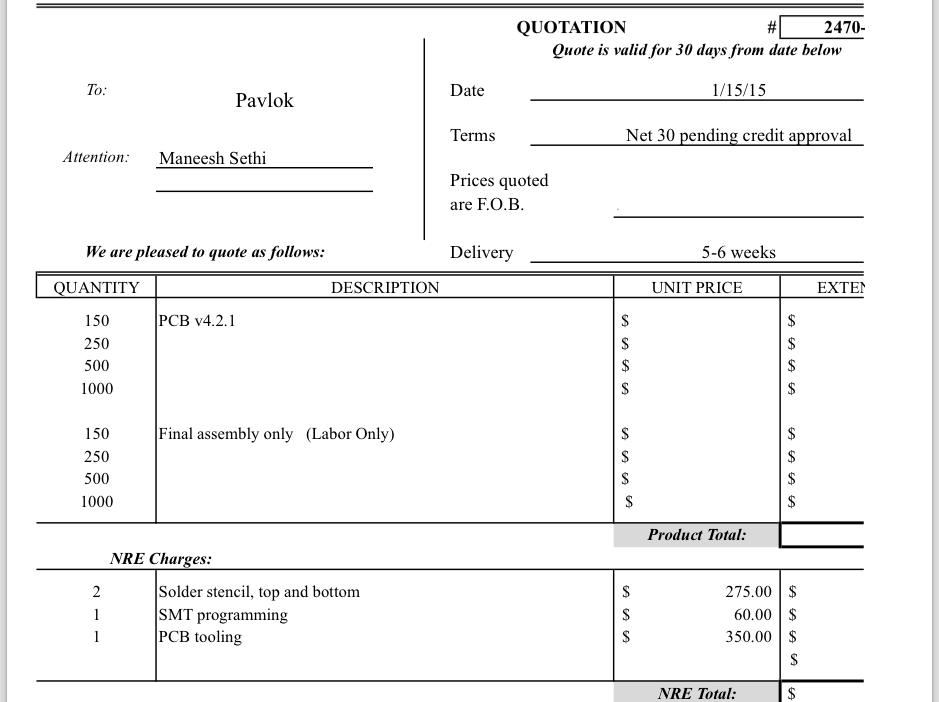
It is extremely important to know what your manufacturing costs and delivery costs will be before you begin crowdfunding, or you may find that you raised an insufficient amount to deliver your product to consumers, dooming you to failure. We made the mistake of not calculating in shipping costs (particularly international) when we launched our campaign, and had to quickly backtrack and require our international customers to pay for shipping, or else we would not have been able to deliver their product. As Ben (correctly) stated:
Crowdfunding dollars should be focused on production costs (tooling, inventory, packaging, logistics) rather than development costs (customer development, prototyping, salaries).
One major irony hurt us: because these were pre-sales, they were reflected on our balance sheet as a liability, not as an asset. Thus, when we went to apply for an SBA loan in 2015, it seemed like we had LOST >$250k — — when in fact, it was cash in the bank.
This is a key tip: Pre-selling product can actually hurt your chances of getting a loan.
Factory Financing
Ben is pretty bullish on factory financing, and for good reason. It is essentially a no-cost loan. Obviously you pay for the product eventually, but you get 30, 60, sometimes 90+ days to sell that product before the money for it is due. This helps with sales and manufacturing projections, but also it is just plain useful for liquidity. Here’s Ben’s words on factory financing:
Factory financing is the most powerful form of financing for hardware companies. It usually comes as a line of credit (sometimes known as payment terms) extended by your contract manufacturer (CM). Instead of the CM requiring you to pay for parts and labor upfront, a line of credit allows you to delay that payment by 30 days or more. Unfortunately, CMs rarely extend credit to small startups during their first production run.
Ain’t that the truth. Prototyping companies typically won’t give any terms — — it’s cash up front.
We managed to get one firm to give us a $7,500 credit with net-60 terms. It wasn’t until we had proven much more sales (and had CMs competing for our business) that we managed to negotiate net terms for a greater portion of the product.
Additionally, we sourced most components ourselves. Pavlok has 80+ components, and many of them won’t allow us terms at all. With our >dozen vendors, some gave us net 30, some net 60 terms.
For our first production run we spent over $30k on tooling alone because we have multiple components, each requiring their own tool. Depending how large your initial production run is, financing production can be a crushing financial burden as well — for our first 18 months, we had to pay up front for all of our manufacturing.
Purchase Order Financing
Purchase order financing is a great way of financing manufacturing, if you’ve already established a sales partnership with a well known retailer. Ben describes one scenario:
If you’re lucky enough to get a significant purchase order from a brand-name retailer (or well-known B2B customer) it’s often possible to convince startup-friendly banks to provide debt financing based on pending sales. There are also financial institutions that specialize in PO financing that can be more lenient than banks. If you’re selling $2M worth of product, the lender may advance your CM $1M to manufacture the product and then collect the payment directly from the retailer. You pay for this with fees based on the amount of time between when the cash must be provided to the supplier and then the customer/retailer pays.
We had the opposite situation — instead of having a big purchase order, we had pre-sales coming through. That is, instead of having upcoming cash, we had already received the cash — — and had already spent it.
Almost every firm we approached turned us down. They said we needed an upcoming purchase order to make it happen.
After a ton of searching, we convinced OnDeck to provide us with $80k in financing (with an option to double it in the future). Inventory/PO financing is VERY expensive. They took a $2,000 initial fee. We had a factoring rate of 1.37 — — which means that we owe back 1.37x the loan, due in 11 months ($109,200). But because we make a profit on each unit, the numbers work out.
Venture Debt
Rather than betting on the potential of the business (like equity investors do) venture debt is mainly betting that your existing investors will keep financing the company. Having access to venture debt often requires investment from brand-name VCs. Often these investors will have to communicate to the venture debt firm that they have significant capital in reserve to fund the company going forward. The amount you can raise will depend on how much venture capital you’ve taken in and you’ll usually issue warrants as downside protection.
We didn’t utilize venture debt because we had very little venture capital to back it up. We tried, but venture debt firms asked us to have a Series-A arriving first. Venture Debt is typically added on as part of a VC round — — it seems unlikely to get it on its own.
Other Types of Debt(ish) Financing
There are a couple types of financing that Ben didn’t mention, that we pursued or utilized.
Bank Line of Credit
If you have a good relationship with your bank, they may extend you a line of credit. Our bank (TDBank) has opportunities for up to $150,000 in credit. A line of credit is a VERY good form of debt — — it has no costs unless you use it, and it’s only charged when you go into the red in your bank account. We were unable to secure a line of credit this year, due to our pre-sales liability situation mentioned in the Pre-sales section above.
SBA Loans
These are loans backed by the Small Business Association. Excellent loans, excellent terms, but we were unable to procure them for the same reasons above. You’ll need your business to have grossed >$50k the previous year in order to apply for a decent SBA loan.
Convertible Debt
Convertible debt is a loan that typically converts into equity at the Series-A. We raised quite a bit of convertible debt — — about $600,000 (uncapped, 10% interest, 20% discount to series A). This was done mostly through angels and friends.
Credit card debt can be an effective way to gross cash when you are launching a product. Be VERY wary because obviously credit card debt can rise up and bite you in the ass. But, because we were funding a hardware product we expected to gross a lot of money on, credit cards gave us cash-flow and 30-day no-interest payment terms. I started Bolt with no debt, and probably have about $75k in debt on my cards now.
Our Total Usage of Debt
Here is a summary of our usage of debt (estimates)
We leaned heavily on presales, and because we had a competitive advantage in our market (our advantage was that we have no competitors) it worked out well for us.
We did not have to take venture capital nor did we have to maintain an astronomical burn rate because our sales we more or less guaranteed, so long as we could reach consumers with our messaging and convey our product and brand values. We might change some of the little steps along the way (promised shipping deadlines, for example), but the strategy was a great one for us. We also didn’t have to take “real debt”, aka a bank loan, until Summer 2015, which is amazing considering we had very little venture capital. Our ability to fuel our growth through presales is one of the things we are most proud of.
What didn’t go well?
Because we weren’t venture backed and we had an unproven product, a lot of people and companies said no to us, for a lot of different reasons. We couldn’t get venture debt because we had no venture capital well to tap into in case we started running low on cash. There were some months where if we didn’t meet pre sales goals for that week or that month, we wouldn’t have been able to pay salaries let alone pay for manufacturing. That was extremely stressful, and raising slightly more venture capital would have eased some of these concerns, allowing us to focus on manufacturing issues instead of sales. This (in part) lead to our delays in shipping, which hurt presales to an extent. We learned that everything is a balance, and all parts of the business affect other parts greatly.
What we would do differently?
If we could do it all over again, we would spend more time considering our manufacturing costs and finding a manufacturer who was willing to give us net-30 or better terms. We could have dramatically reduced our presales period if we did not have to raise the funds for manufacturing through presales — if we could have product on hand to ship when it sold, it would have greatly reduced the stress that we experienced in the presales phase.
Conclusion
Hardware is hard. Everyone (well, anyone who’s done it) knows that. We succeeded because we had a unique product and aggressive sales strategies that allowed us to bring our product to market without taking large amounts of venture capital. Not taking that venture capital did close some doors for us (unable to secure venture debt, we had to struggle to pay for manufacturing costs ultimately leading to a long presales period), but we were able to overcome the challenge of creating the initial manufacturing run without giving away a large stake in the company — something we’re very thankful for now. The market you are attempting to capture will dictate what strategy is best for you. Always remember it is a balancing act: debt = obligation. Don’t take on debt without considering your COGS and overhead costs.
Are you interested in learning more about how to change behavior? Please head over to https://wp.pavlok.com/email and let us know your bad habit. Or, get your own Pavlok on our site or on Amazon.



 The original necklace prototype that got me my job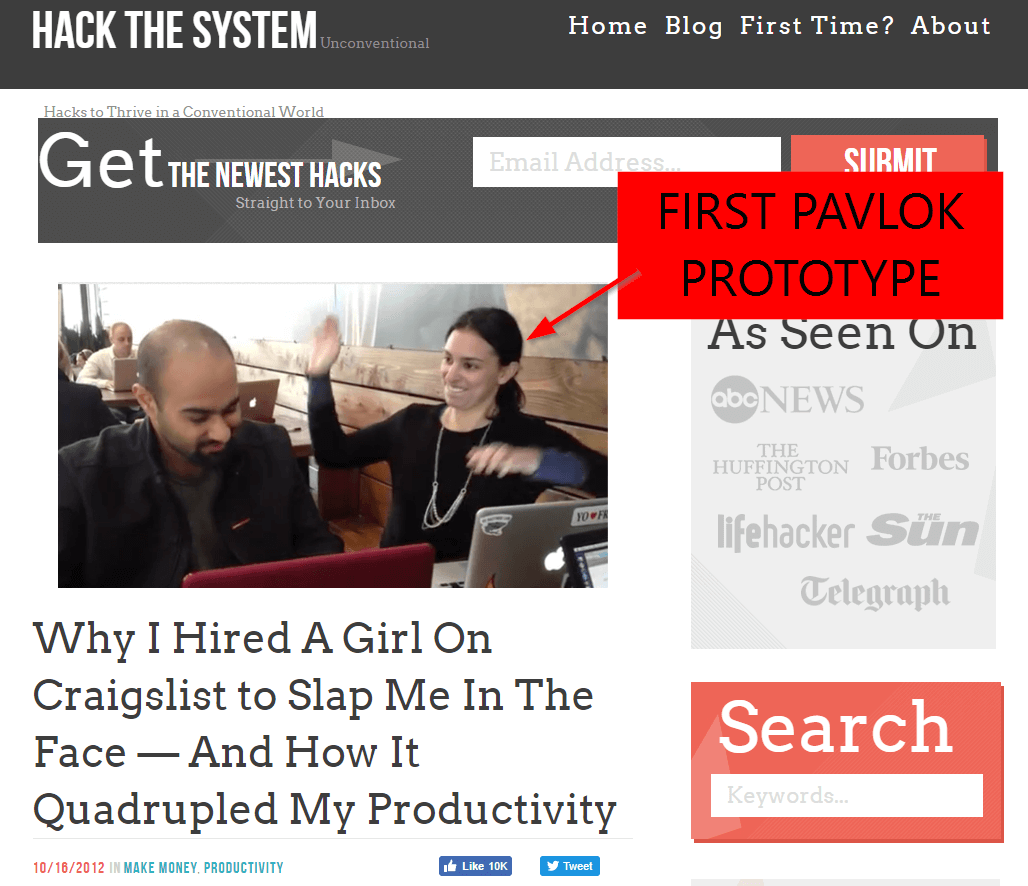
 .
.