How Jack S. used Zipties to Never Sleep In Again

[et_pb_section fb_built=”1″ admin_label=”section” _builder_version=”3.22″][et_pb_row admin_label=”row” _builder_version=”3.25″ background_size=”initial” background_position=”top_left” background_repeat=”repeat”][et_pb_column type=”4_4″ _builder_version=”3.25″ custom_padding=”|||” custom_padding__hover=”|||”][et_pb_text admin_label=”Text” _builder_version=”4.1″ background_size=”initial” background_position=”top_left” background_repeat=”repeat” hover_enabled=”0″]

Jack has always had incredible struggles with waking up in the morning. No matter what, he would never arrive on time for morning meetings…until he tried a Pavlok.

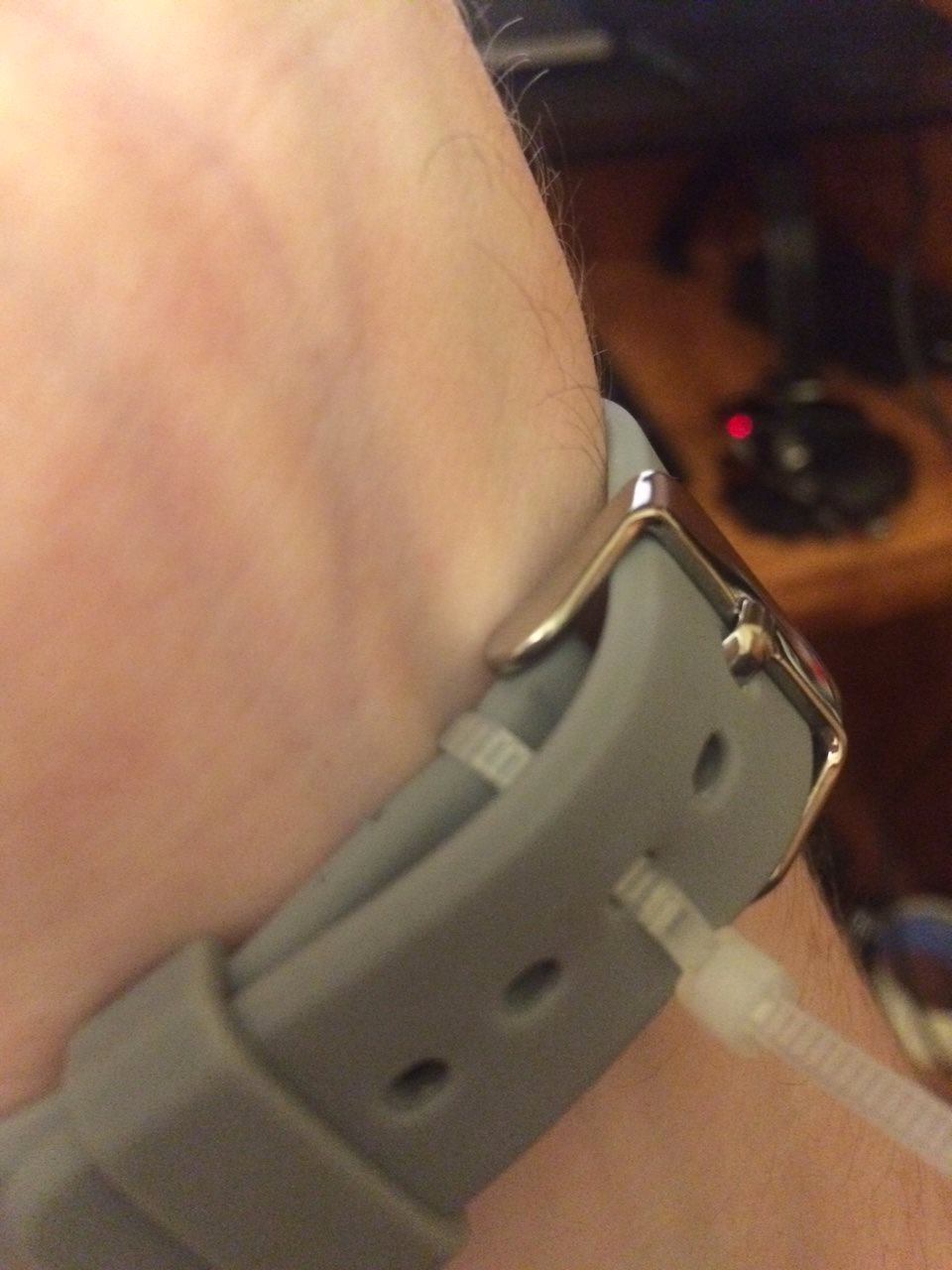
While Pavlok is extremely effective for waking up, every once in a while (extremely rarely) severely heavy-sleepers will somehow take the device off in their sleep. Jack was one of the few, so he invented a Macgyverd method to never sleep in again. Our CEO Maneesh Sethi had the pleasure of interviewing Jack.  Read below to see the details…

ns166-9d4cc5bb-d031-4543-ab9a-8cf8346e6ea7-v2

Maneesh: Tell me about your sleeping habits before Pavlok.

Jack: I’ve suffered with struggling to get out of bed in the mornings since I was a kid

I’ve previously tried many things. The world’s loudest alarm clock; an alarm clock I made that would spray you with water.

At my previous startup, We had a morning meeting every week. I’d actually have to sleep on the couch in the office to ensure I’d be in the office on time for it

I didn’t have trouble waking up the sound of the alarms. Just trouble getting out of bed. I would always hit the snooze button.
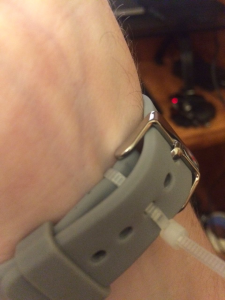
Pavlok (+zip tie) is the only alarm that I’ve ever used which works. Pretty life changing

Maneesh: How long have you been using Pavlok?

Jack: Since I came up the the zip tie hack that I shared in the group. I think like 3 months

Maneesh: How often do you use it? and always w/ the zip tie?

Jack: I use it about 4 times a week (not on weekends). Yes, always with the zip tie.

Before I was embarrassed! l was always late to everything, no matter what it was, if it happened in the morning.

ns166-dafc8a35-3b0e-4359-bee0-f70f3b23e62e-v2

Maneesh: What time do you wake up now? how much time does it take for you to get out of bed?

Jack: it depends when I want to wake up, depending on meetings etc. I now give myself about 10-15 minutes to wake up.

Say I want to wake up at 9am. I’ll set an alarm at 8:45am and another at 8:55am. With pavlok set for 9am

So the 8:45am one basically tells me I’ve got 15 mins till the pavlok goes off. The 8:55am one is to remind me to get out of bed and take off the pavlok before it goes off at 9am.

So 8:55am I’ll run out of my room to kitchen to get scissors to cut it off. Like sprint out of my room.

Maneesh: Hahaha, oh man. I want to make a movie of this.

Jack: My roommate finds it quite entertaining

Maneesh: Any features you’d like us to add?

Jack: Something I’d hacked around with before with my phone – but would likely need a hardware change to add – would be NFC. Ie need to touch it to an NFC sticker in the shower to shut it off

Maneesh: Hell yes

Jack: Potentially could be achieved with bluetooth. But bt is a bit annoying in pairing

Maneesh: Agreed — NFC is something I intend to add onto a future generation of Pavlok. Who would you recommend pavlok for?

Jack: For users of the Alarm: anyone that struggles to get out of bed in the mornings / is late for work

For users of Pavlok: ocd sufferers, smokers, hair pullers, sugar addicts, binge eaters

Maneesh: Any last words?

Jack: Everyone using the alarm should check my zip tie method before I patent it

Maneesh: Hahahahaha yessss

Thanks for your story Jack!

[/et_pb_text][/et_pb_column][/et_pb_row][/et_pb_section]
We’re Big in Japan

So on Monday night, after I sent the previous email, I downloaded the Google Analytics app and was instantly hooked by the realtime visitor feature. Like, I couldn’t look away. “Oh man, someone in California is on our web site! Which blog post is he gonna read?”

After like, an hour of this, suddenly, the number suddenly shot up. “Hey someone from Japan! Hey, another person from Japan! Wait, what’s going on?”

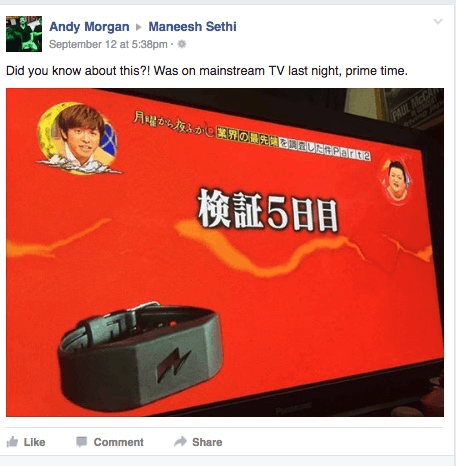
Then my friend Andy Morgan posted this:

image
We were featured on a Japanese Talk Show/Game Show — for 10 minutes, they were testing the zap on different people while sleeping. I wish I had a clip I could share — I’ll send one if I can get access to one on Youtube.

The funny thing is, our original Pavlok wasn’t a big hit in Japan. However, when we released the Shock Clock on Indiegogo in April, Japan was by far the most popular non-US country of them all.

I think a lot of people in Japan aren’t getting enough sleep…And hey, we’re here to help!

So I’m extremely pleased to announce that we have successfully finalized the design, production, and (almost) software for our second product The Shock Clock. We are delivering the final thousand units (out of 2800 backers) in the next two weeks.

I don’t have an official date for the Shock Clock launch right now — it looks like it will be the first half of October — but we just listed it as a preorder on our store.

Preorder The Shock Clock ($99 + Free Shipping until Friday Night)

How Bud Quit Smoking


“Giving up smoking is the easiest thing in the world. I know because I’ve done it thousands of times.”

            -Mark Twain

Here’s the truth: all addictions are difficult to break. We tell ourselves that starting today it’s never happening again, we struggle, we rebound, and we give up. It’s a vicious cycle, and it is especially tough for smokers. Quitting smoking is no easy task, and the tobacco companies designed it that way. Nicotine is pretty much the most addictive chemical substances that you can purchase legally.

According to the CDC tobacco smoke contains a deadly mix of more than 7,000 chemicals; hundreds are harmful, and about 70 of them can cause cancer. From the moment you start, smoking increases the risk for serious health problems, diseases, and even death. Beyond our physical well being smoking can also affect the way we perceive things mentally. Smokers are 70% more likely to suffer from anxiety and depression.

It’s no secret that smoking is horrible for your health. What does seem to be a “secret” though is finding a way to quit and stay cigarette free. People trying to quit smoking cold turkey succeed only 5% of the time, and even though the patch or gum give you a 50% better chance, that still only equates to 7.5% success.

Meet Bud, who (successfully) tried a new way of quitting smoking

Bud was a smoker for almost three years. He wanted to quit because smoking made him miserable: it was causing anxiety and he felt physically sick from smoking. But because nicotine changes the way your brain operates, he just couldn’t stop.

Like so many others before him Bud tried to quit again and again, but it just didn’t happen. Dozens of attempts at quitting cold turkey failed, as did both the patch and gum. He continued to smoke 1-2 packs a day for three years.

“Smoking left me feeling anxious, sick, and with a terrible cough, but I just couldn’t stop.”

The thing that finally got Bud to change his life? His Pavlok.

Bud had been a fan of Pavlok since the very beginning and decided to invest in a prototype with the sole purpose of quitting smoking. “Using Pavlok for the first time (while it wasn’t pleasant) was an incredible feeling. It suddenly helped me maintain focus on my goal.”

Pavlok utilizes psychological conditioning which breaks bad habits quickly and permanently. Every time you perform your bad habit, Pavlok releases an uncomfortable electric stimulus (or you can trigger it manually by pressing the button). Instead of attempting to wean you off nicotine (like the patch/gum) or use sheer willpower (“cold turkey”), Pavlok uses proven behavioral science to quickly reduce cravings and train away the desire to perform the bad habit.

The way Bud used Pavlok was unbelievably simple: if he smoked, he got a zap. No gums to chew or patches to apply. The best (and most counterintuitive) part of the Pavlok process: you don’t need to “try” to stop. As long as you use consistently use Pavlok every time you do your habit, Pavlok does all the work for you.

Let me explain.

Pavlok works by creating an aversion to your habit. Rather than try to deny you access to your habit, or only reduce cravings, Pavlok trains your brain to dislike your habit. Because you learn to dislike doing the habit, your cravings naturally subside and you simply stop wanting to do your habit.

To quit, Bud spent 5 minutes per day purposely having a cigarette and triggering the Pavlok. Doing these training sessions meant that his brain repeatedly got that uncomfortable zap and associated it with the cigarette he was smoking. In addition to the daily 5 minute sessions, Bud zapped himself for every craving he had throughout the day. When he gave into temptation like we all have the tendency to do, a simple button press on Pavlok snapped him out of his cigarette craving state of mind. His brain instantly began to recognize the connection between smoking and the zap he received as undesirable. Within 3-4 days Bud reported that his cravings had lessened significantly and he no longer wanted to smoke. “It was remarkable how quickly that happened. I virtually quit overnight. I can honestly say with no hyperbole that Pavlok really has changed my life.”

Bud reports that using the Pavlok to quit cigarettes has helped boost his self esteem and end his anxiety. Now Bud is healthy, saving over $300 every month not buying cigarettes, and feeling better about himself overall. His body is healing and he can look forward to a healthier life without cigarettes. Bud officially quit in March 2015 and today he is still proudly cigarette-free today.

Here is a video Bud did in March 2015 while he was quitting:

And here is a follow up video that Bud did in January 2016 to share his success story:

Are you ready to quit? Buy a Pavlok and take the 5 day challenge. In just 5 minutes per day for 5 days, you’ll reduce cravings noticeably, and most users have no desire to continue smoking (and have quit!) at the end of the 5 day challenge.

Heather Kicked Her 25 Year Nail Biting Habit


“Habit is stronger than reason.” -George Santayana

Heather bit her nails for 25 years out of sheer habit, even though she knew she should stop.

It is a habit many people have to a certain degree.  For some, they may only bite their nails when there’s a rough edge or one is longer than all the rest.  For others, it can be a painful habit that is so obsessive the nails are bitten down to the skin, and even then, attempts are still made to bite at the nails.


Nail Biting Habit An extreme case of nail biting. Photo courtesy of Wikipedia.

Onychophagia is the medical term for nail biting.  Nail biting is considered a body-focused repetitive behavior.  Though it can induce stress, it can also be caused by stress.  A recent study found that two of the largest contributing factors to nail biting were boredom and frustration.

Meet Heather, who spent 25 years biting her nails.

Nail Biting Habit

Heather’s case of nail biting aligns well with the study as she found herself biting her nails consistently when on the computer, driving, or deep in thought.  Boredom was her trigger and she would usually unconsciously be performing the bad habit.  Heather had tried to quit many times, but continually failed because many times she wouldn’t even realize she was biting her nails.

Heather bought a Pavlok to help with her nail biting habit and her diet for figure competitions.  She started with nail biting because it was such an established habit and she knew she could count on her family to help keep her accountable, and notice when she was nail biting and didn’t even realize it.

With the help of Pavlok and her family, Heather quickly stopped biting her nails.

Days 1 and 2 of using the Pavlock, Heather set aside five minutes a day to bite her nails, and shock herself while she did.  Doing these sessions was key in training her brain to dislike nail biting.  Her brain received the shock and associated it with the nail biting.  She also shocked herself every time she caught herself biting her nails or even thinking about it.  But she realized that she was unconsciously nail biting, so that’s where her family jumped in.  Pavlok offers the option to self shock using either the wristband, or via the app.  So when Heather didn’t realize that she was biting her nails, her family would step in (gleefully, actually), and shock her via the app.

See Heather’s complete story here:

Heather’s nail biting quickly dissipated.  Her brain associated nail biting with the negative consequence of a shock from the wristband, and she soon saw even her cravings to bite disappear.  Heather’s story shows that no matter how long the habit has been around, it is still possible to quit using Pavlok!

Are you ready to stop biting your nails?  Whether you consciously or unconsciously bite your nails, Pavlok can help you kick the habit in as little as a week. We are so sure we can help that we offer a 6 month money back guarantee!

Tatyana Quit Sugar and Snacking


“Sugar is the new tobacco.” – Cynthia Kenyon

Tatyana’s cravings for sugar were just as addictive as a smoker’s for tobacco.

There’s a new drug on the market and it’s readily available on almost every corner and at every store.  It’s highly addictive, and even better, it’s legal.  We have holidays that embrace it, and readily give it to our children.  What is this crazy drug you ask?  Sugar.

Everyone knows sugar is not great for your health.  But most poke fun at their “sweet tooth” without realizing it is an actual addiction.  In a recent study conducted at the Institute of Health and Biomedical Innovation, showed that “increased sugar consumption has been shown to repeatedly elevate dopamine levels…similar to many drugs of abuse.”  This provides a little more insight as to why it is so hard to kick those sugar cravings cold turkey.

As a kid, parents like to threaten that eating too much sugar can rot your teeth.  Though it can, it also has been linked to obesity, diabetes, heart disease, and other devastating diseases. It is found in more food than not in every food store, and sugary foods are often less costly than all natural alternatives.  Being a main ingredient in foods that have been consumed since childhood, it can be a very hard habit for many to kick.  The brain craves food with sugar.

Meet Tatyana, who found a new way to kick her sugar addiction to the curb.

Tatyana was introduced to Pavlok via a friend’s facebook post and it piqued her interest.  She did some research, watched the success stories, and fell in love with the concept.

The Pavlok system of breaking bad habits quickly and permanently appealed to Tatyana because of the psychological conditioning it uses, which was different from other programs she’d seen and used.  Every time there is a craving or temptation, the user can manually give themselves an electrical shock.  The brain quickly learns to no longer desire the habit as it once did.

Of all the habits that she hoped the Pavlok would help her break, the first habit she decided to kick was her addiction to sugar.  Being a dental student and having a rather stressful life, Tatyana became a stress eater, and sugary food was her go to when she would binge.  It had been bad since as long as she could remember.  Her go tos would be a pan or brownies or a jar of Nutella all at once when coming home after a stressful day.  She had tried the Whole 30 Challenge previously, and though she avoided most sugar during the initial 30 days, was back to her sugar binging habits quickly once the challenge ended.

It took very little time for Tatyana to start seeing results that stuck with Pavlok.  

It took Tatyana about 3-5 days to see results.  Every time she has a craving, thinks about sweets, or sees them on the table, Tatyana will shock herself with her Pavlok.  The shocks are bearable, but unpleasant, and thus it made her not want to even think about sweets in order to avoid another shock.

See Tatyana’s testimonial:

So why did the Pavlok work better than something like the Whole 30 Challenge? Programs such as this use 30 days of clean eating as a way of breaking habits and building a healthier lifestyle.  But immediately once the program is over, many divert back to their old eating habits because the challenge is complete and they “can.”  Pavlok instead creates an aversion to the habit and trains your brain to dislike the habit itself.  Tatyana’s brain naturally started to dislike the sugary foods, and thus helped her cravings to subside and her to stop eating sweets.

Less of a heavy, sugar coma feeling overall, and more endurance during workout gave Tatyana reassurance that kicking her sugar addiction was the right thing to do.  She has been able to lose weight around her midsection and cut down her body fat. Overall, the sugar addiction is in control and she feels both happier and healthier.

Are you ready to kick sugar to the curb?  Buy a Pavlok and in as little as 5 days, you could see your sugar cravings and consumption drastically reduced and be on your way to a healthier you!  We are so sure that Pavlok will help break your bad habits that we offer a 6 month money back guarantee if it does not work for you.


Naomi Kills Her Hair Pulling Habit


“Self consciousness is the ultimate wisdom of life.” – Debasish Mridha

Naomi was unconscious about just how much she was pulling her hair until she started to use the Pavlok.

Trichotillomania is a chronic disorder that involves an irresistible urge to pull hair from one’s own body.  The severity of the disorder can vary from manageable to overwhelming, and some may be consciously doing it, while other unconsciously perform the act.  The cause is unclear  but can be a mix of genetic and environmental factors.


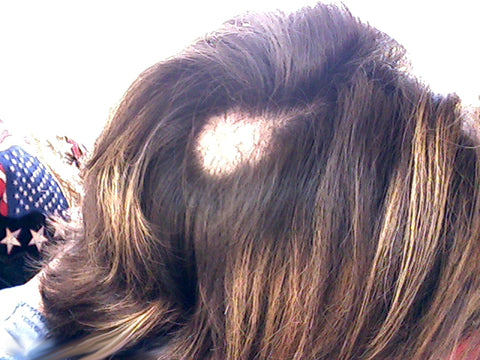
A spot from pulling out hair due to trichotillomania. Photo courtesy of Wikipedia.

For some, trichotillomania can be debilitating.  The damage from excessive hair pulling can cause emotional distress and problems with social functioning.  Sufferers can find themselves avoiding others to hide bald patches or missing eyelashes.

Meet Naomi, who found a way to stop having to wear hats due to pulling out her hair.

Naomi had been pulling her hair out since she was 14, for over 12 years.  It was something that she would not realize she was doing.  She found herself constantly wearing a hat, even when she did not want to, because that was the only way she would be unable to pull her own hair.  It also hid the small bald spots she would see from excessively pulling hair from the same spots.

After mentioning to a friend that she was suffering from trichotillomania, he brought up the Pavlok.  Naomi was not interested at first, but after he brought it up a few times, she decided she had nothing to lose.

Because trichotillomania is a behavior that can be performed even unconsciously, a Pavlok is the perfect device for breaking the habit.  Pavlok uses psychological conditioning to take away the desire to perform the undesirable behavior.  By releasing an electrical stimulus every time the undesired behavior is performed, the Pavlok conditions the brain away from the bad habit.

Naomi quickly noticed how often she was touching her hair and was able to stop with Pavlok

Every time Naomi would try to touch her hair, she would zap herself with her Pavlok.  “It was shocking how strong it was.” says Naomi.  Her hair pulling cut down immediately and she did not have the urge to touch her hair at all.  She could now stop wearing hats as they were no longer needed to stop her from pulling her hair.

Naomi received validation a few months later when she ran into a couple friends she hadn’t seen in awhile.  They commented on how much better her hair looked.  Because she had stopped pulling it, it was now fuller and thicker.

See Naomi’s full story:

With Pavlok, Naomi feels liberated.  She is liberated from constantly wearing a hat to control her hair pulling urges, and she feels in control consistently.  Every day life is now better because she has trained her brain resist the urge to pull her hair.

Do you have a habit you’d like to take control over?  In as little as a few days, you too could see results reducing your undesirable habits with a Pavlok.  If it doesn’t work?  We offer a 6 month money back guarantee – but don’t worry, we believe Pavlok is the key to breaking your bad habits.